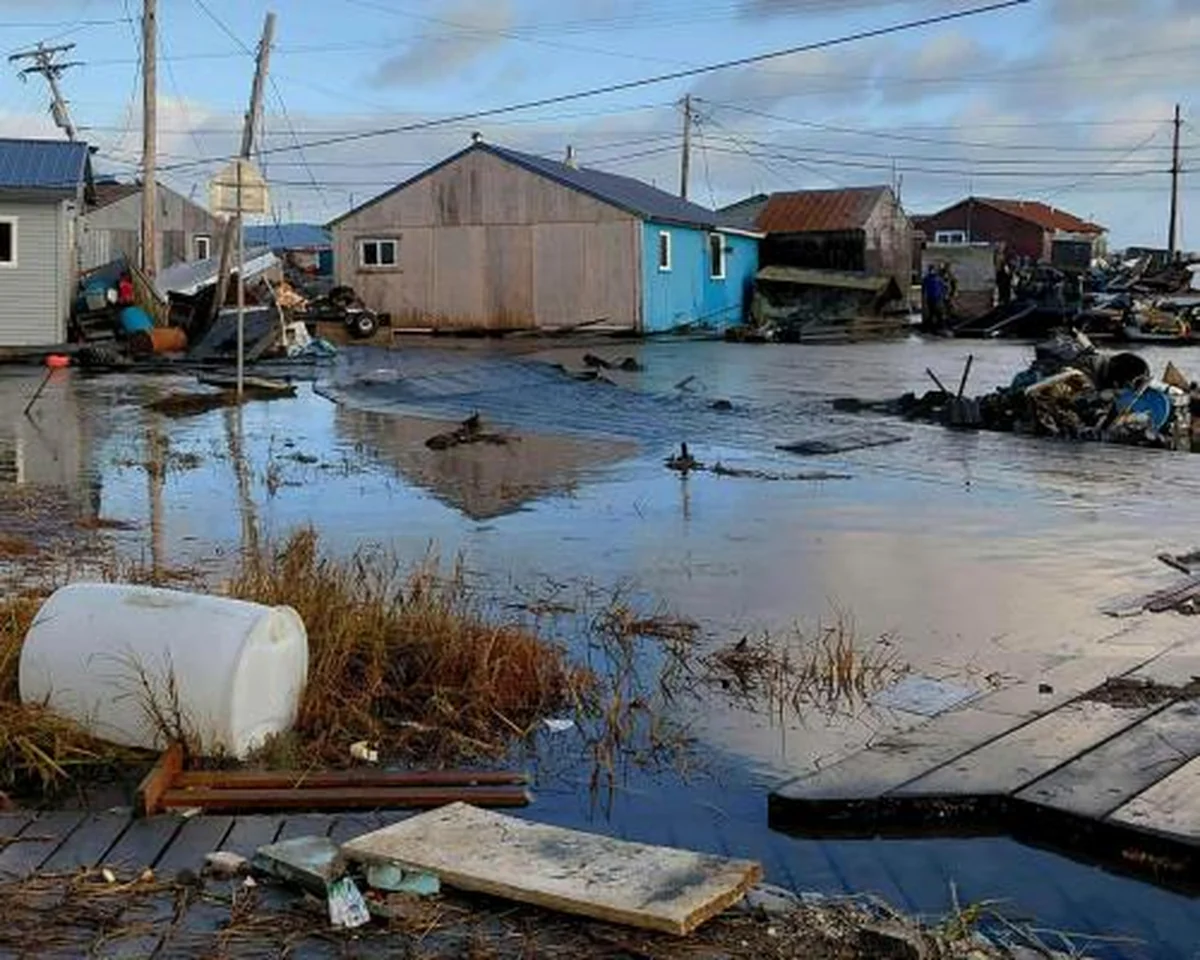
Alaska Storm Response Hindered, Trump-Era Cuts Eyed
ANCHORAGE, ALASKA – A devastating storm, considered among Alaska’s most severe, has left hundreds without homes and is now spotlighting the Trump administration’s past efforts to scale back federal weather and climate safeguards. Experts suggest these actions may have hampered the warning and response mechanisms for the catastrophic event.
Devastation in the Delta
On October 12, the powerful remnants of Typhoon Halong lashed the remote communities nestled within southwest Alaska’s Yukon-Kuskokwim delta. This expansive, low-lying tundra region, home to some of the nation’s most isolated populations, was inundated by floodwaters. The resulting damage was catastrophic, forcing a large-scale evacuation across much of the area. Survivors recounted harrowing tales of having mere hours to gather their essential belongings into a single bag before boarding rescue helicopters, often having to abandon cherished family heirlooms and beloved pets.
The Alaska National Guard mounted a significant airlift operation, transporting more than 1,500 individuals to Anchorage aboard military cargo planes. This massive evacuation represented a substantial portion of the approximately 20,000 Yup’ik Alaska Native people residing in the affected region. On Monday, Alaska’s Governor Mike Dunleavy indicated that due to the extreme severity of the destruction, it could take over 18 months before displaced residents are able to return to their homes.
Federal Aid Delay Under Scrutiny
Despite the immediate crisis, a federal disaster declaration, crucial for unlocking vital federal assistance, was not authorized by President Trump until Thursday – nearly a full week after Governor Dunleavy had formally requested it. Such a declaration is essential, enabling the Federal Emergency Management Agency (FEMA) to collaborate with state, local, and tribal authorities in recovery efforts.
The delay quickly drew sharp criticism from emergency management professionals. Samantha Montano, an expert in the field, voiced her concerns on social media, stating the delay was “directly keeping funding out of the hands of disaster survivors who need it.” Montano further labeled the hold-up “absolutely insane,” emphasizing a significant departure from standard procedure.
“This disaster is of a severity that the request would have normally been signed within a day of receiving a governor’s request,” Montano elaborated. “Not doing so is a deeply alarming departure from what Americans have come to expect from the federal government in times of disaster.”
Broader Context: Dismantling Protections
The faltering federal response to this unprecedented Alaskan storm has intensified scrutiny over the previous administration’s policies. Critics argue that efforts under the Trump administration to dismantle federal weather and climate protections may have directly contributed to a hindered warning process, leaving vulnerable communities less prepared for such powerful natural events. As survivors grapple with the long road to recovery, questions persist regarding the efficiency and responsiveness of the federal system in the face of increasingly severe climate-related disasters.
Source: The Guardian