Trump’s 2028 Hints Spark Constitutional Debate
Speculation is mounting over former President Donald Trump’s potential aspirations for a third term in the Oval Office, fueled by his own ambiguous statements and promotional merchandise. Despite clear constitutional limits, the 79-year-old has consistently sidestepped questions about a future presidential bid beyond the established two-term maximum.
During a recent trip to Asia aboard Air Force One, Trump addressed reporters, stating, “I would love to do it: I have my best numbers ever.” When pressed on whether he was explicitly ruling out a run for president in 2028, his response remained elusive: “Am I not ruling it out? I mean, you’ll have to tell me.” This latest exchange adds to an ongoing narrative that has kept political observers and legal scholars engaged.
“Trump 2028” Merchandise Fuels Speculation
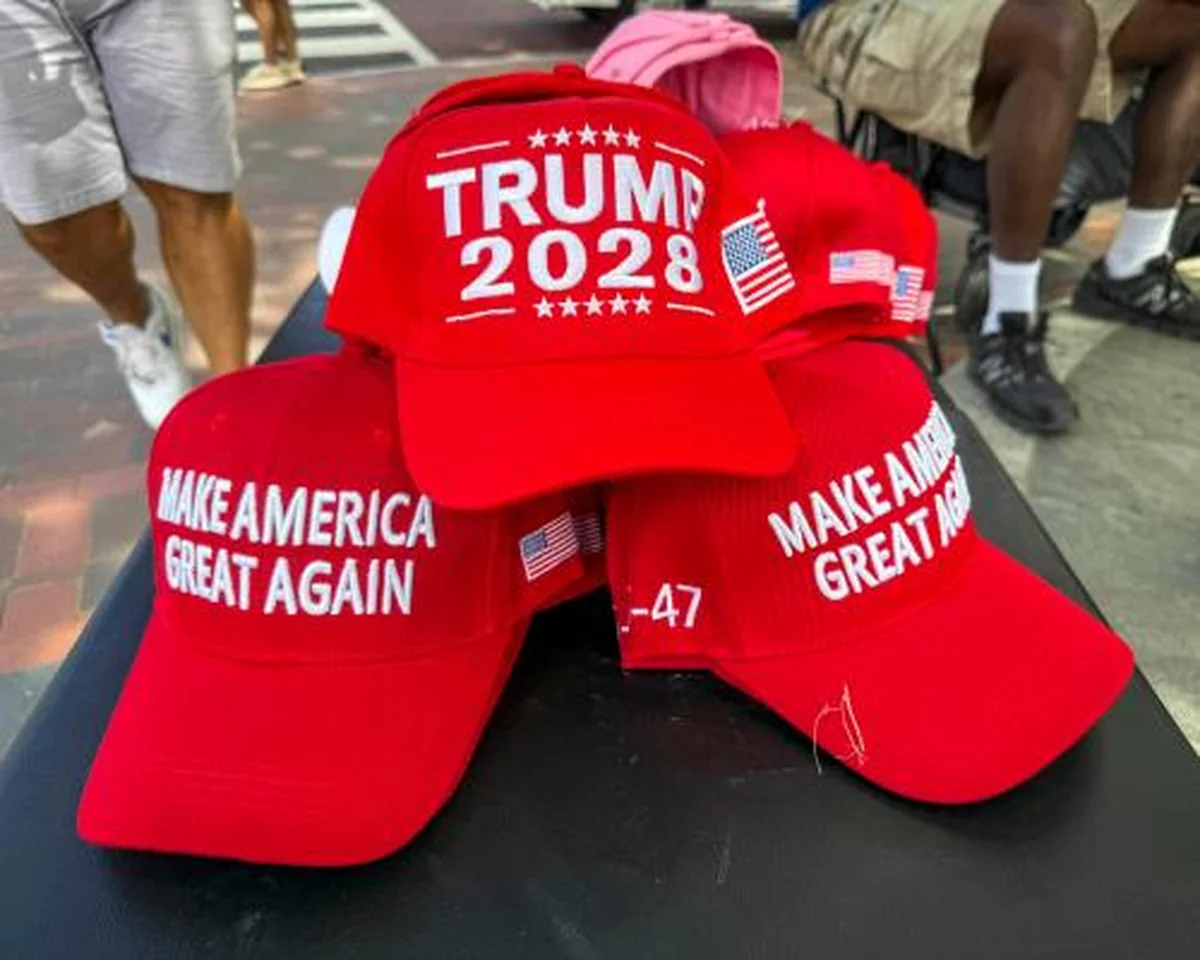
Adding tangible fuel to the fire, the Trump Organization has begun selling red caps emblazoned with “Trump 2028” for $50. These items appear to actively promote the former president as a candidate for the next election cycle. Trump has reportedly taken delight in showcasing these caps, presenting them to foreign dignitaries and famously placing them before Democratic congressional leaders Hakeem Jeffries and Chuck Schumer during budget negotiations in the Oval Office. Jeffries, reflecting on the incident, told CNN it “was the strangest thing ever.”
Beyond the merchandise, a group calling itself the “Third Term Project” is publicly “devoted to getting President Donald J Trump his rightful third term in office.” Further amplifying the long-term prospects, “Maga guru” Steve Bannon, in a recent interview with The Economist magazine, asserted, “Trump is going to be president in ’28, and people ought to just get accommodated with that. At the appropriate time, we’ll lay out what the plan is. But there is a plan.”
The 22nd Amendment: A Clear Barrier?
Amidst this political maneuvering and speculation, the United States Constitution offers a definitive stance on presidential term limits. The 22nd Amendment, ratified in 1951, explicitly states: “No person shall be elected to the office of the President more than twice.” This amendment was a direct response to President Franklin D. Roosevelt’s unprecedented four election victories, breaking a two-term tradition upheld by presidents since George Washington.
Roosevelt, a Democrat who led the nation through the Great Depression and World War II, served a third term and was only months into his fourth when he died in 1945. The subsequent ratification of the 22nd Amendment cemented the two-term limit into law, preventing any future president from serving more than eight years.
Legal Scholars Weigh In
Legal experts underscore the amendment’s unambiguous language. Wayne Unger, a law professor at Quinnipiac University, conveyed to the Reuters news agency that the Constitution’s provisions are unequivocal: presidents are restricted to two four-year terms. While the specific scenario of a former president challenging this limit after already serving one term has not been tested in court, Unger believes any such legal endeavor by Donald Trump would face insurmountable constitutional hurdles and would likely be unsuccessful.
Despite the fervent wishes of supporters and the former president’s own suggestive remarks, the constitutional framework appears to present a formidable obstacle to any aspirations for a third presidential term in 2028.
Source: The Guardian