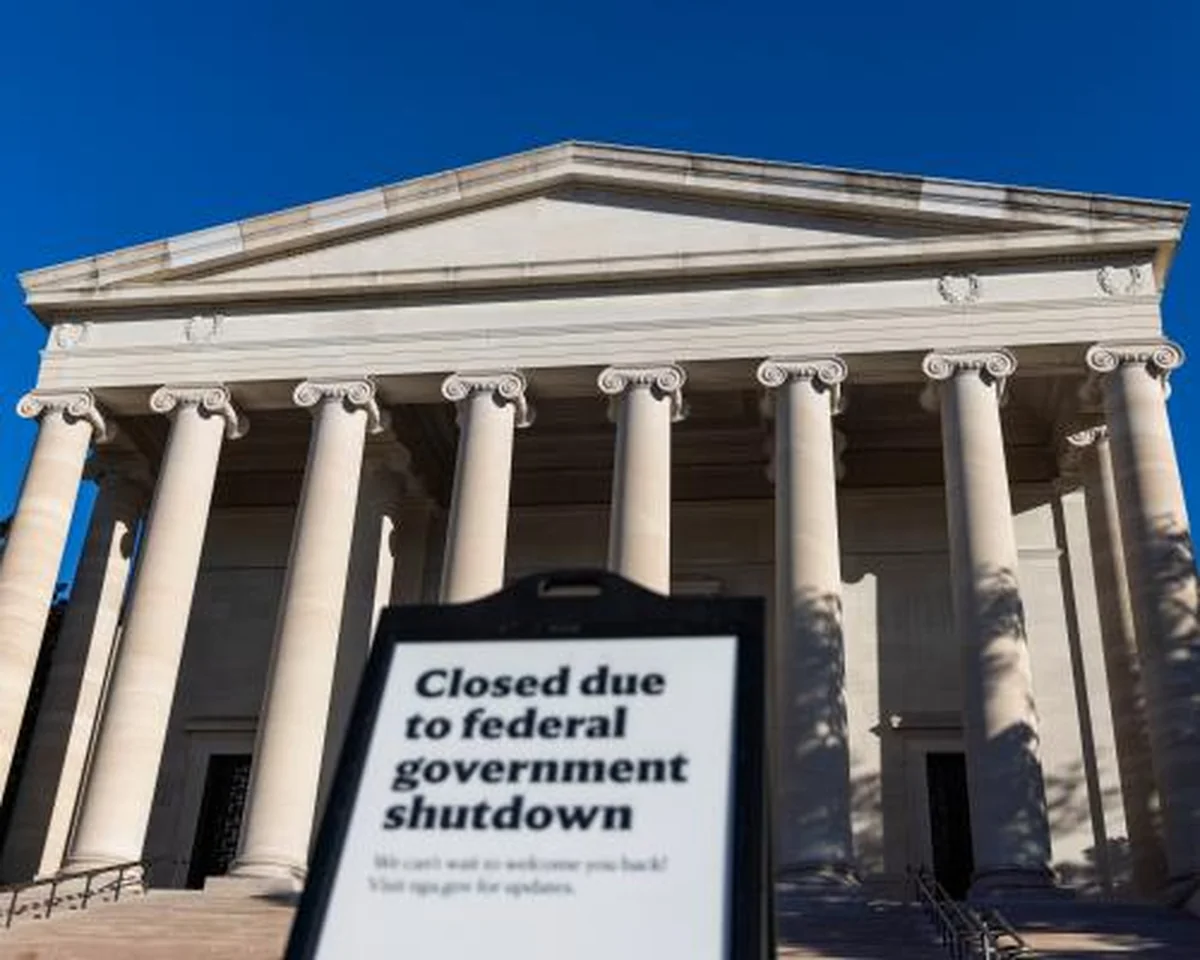
Shutdown’s Billions: CBO Warns of Economic Fallout
Washington D.C. – The ongoing federal government shutdown is poised to inflict a substantial financial blow on the United States economy, with potential losses estimated to range between $7 billion and $14 billion, according to a recent assessment by the Congressional Budget Office (CBO).
The nonpartisan federal agency released its stark projections on Wednesday in a new report submitted to the House budget committee. This detailed analysis emerged as the unprecedented government closure stretched into its fourth week, marking its 29th day with no resolution in sight.
GDP Hit and Director’s Warning
Beyond the immediate financial drain, the CBO report also forecasts a noticeable reduction in the nation’s Gross Domestic Product (GDP). Specifically, it projects a decline of one to two percentage points in the US GDP during the fourth quarter of 2025, a direct consequence of the prolonged shutdown.
Phillip Swagel, the CBO director, emphasized the complex nature of the economic repercussions. “In CBO’s assessment, the shutdown will delay federal spending and have a negative effect on the economy that will mostly, but not entirely, reverse once the shutdown ends,” Swagel stated in his report, underscoring that some damage might be permanent.
He further elaborated on the inherent uncertainties surrounding the shutdown’s full impact. “The effects of the shutdown on the economy are uncertain. Those effects depend on decisions made by the administration throughout the shutdown. In addition, how federal employees and contractors respond to the delay in compensation is uncertain,” Swagel added, highlighting variables that could sway the final economic outcome.
Political Impasse Deepens Crisis
The economic warnings arrive amid a deepening political stalemate in Washington. The Senate remains deadlocked over critical spending legislation, preventing any immediate end to the crisis. On Tuesday, Senate Democrats effectively blocked a Republican-backed bill that aimed to fund federal agencies through November 21.
Democrats have steadfastly refused to support the bill, which requires a 60-vote threshold for advancement in the Senate. Their opposition stems from the bill’s failure to include crucial funding for healthcare programs and its lack of provisions to curb cuts to congressionally approved funding initiated by then-President Donald Trump.
How the Shutdown Damages the Economy
The CBO report meticulously outlined three primary factors driving the projected economic decline. Firstly, the cessation of work by federal employees means fewer essential government services are being provided. Secondly, federal spending on goods, services, and vital food benefits is experiencing a temporary reduction. Lastly, this combination leads to a broader drop in overall consumer and business demand, which in turn temporarily decreases production from the private sector.
Projected Losses Vary
The CBO report laid out multiple loss estimates, contingent on the shutdown’s duration. For instance, if the government were to reopen this week, the total cumulative GDP loss by the end of 2026 is projected to be $7 billion. This specific scenario illustrates the immediate and lingering economic costs, even with a swift resolution.
As the shutdown persists, the financial toll on the nation’s economy continues to mount, creating an environment of uncertainty for businesses, federal workers, and the broader public. The CBO’s projections serve as a stark reminder of the far-reaching consequences of political gridlock on economic stability.
Source: The Guardian