Trump’s East Wing Demolition Faces Public Backlash
A significant majority of Americans express disapproval regarding President Donald Trump’s decision to demolish the White House’s historic East Wing to construct a new ballroom, according to a recent comprehensive survey. The poll, jointly conducted by the Washington Post, ABC News, and Ipsos, reveals widespread public dissent over the architectural transformation of the iconic presidential residence.
The survey, carried out between October 24 and 28, found that 56% of respondents disagree with the administration’s move, while only 28% voiced support for it. The demographic breakdown of the participants indicated a predominantly white sample, with approximately one-third having cast their vote for Donald Trump and another third for Kamala Harris in the 2024 presidential election. These figures underscore a notable segment of the electorate, including some past Trump voters, who are uneasy with the changes.
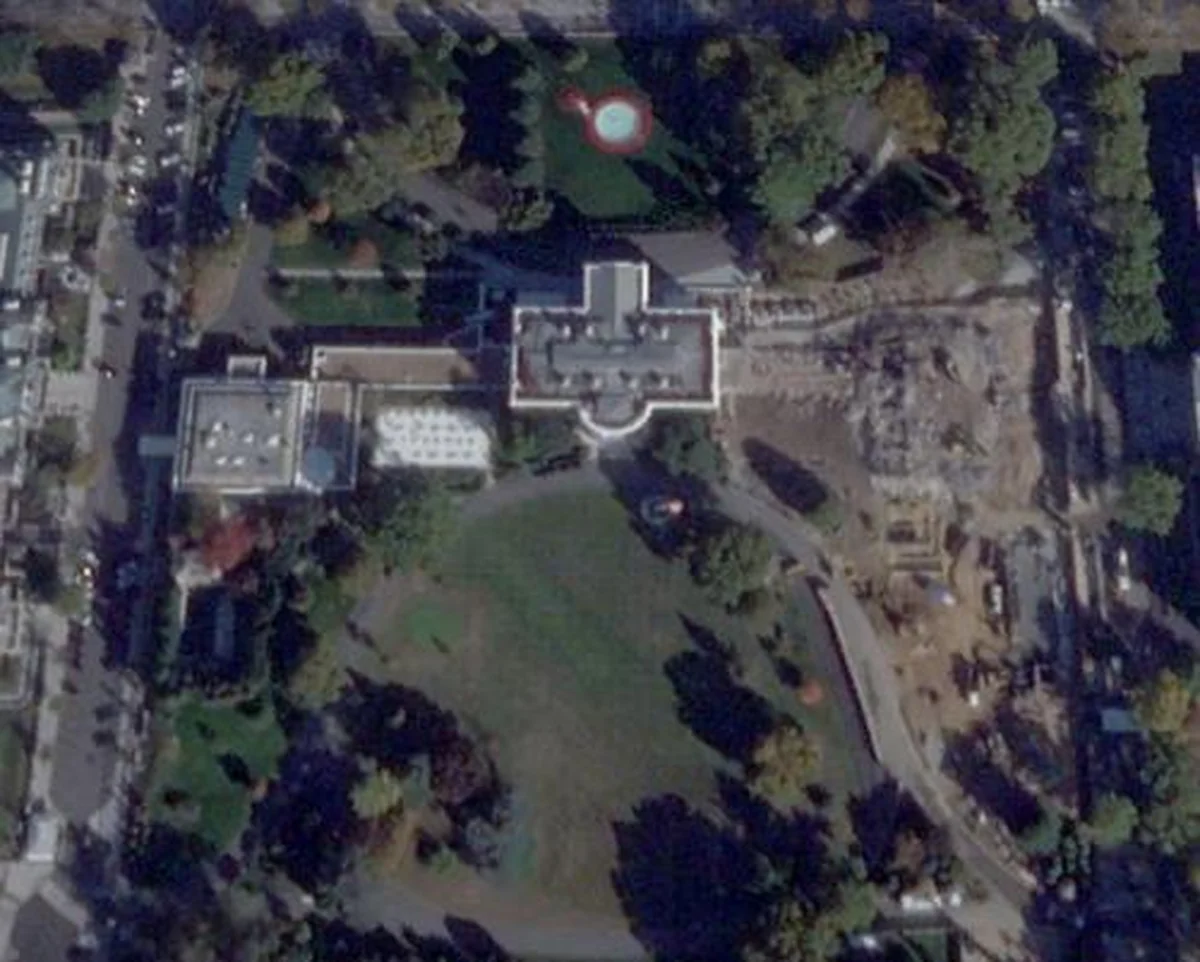
East Wing Reduced to Rubble
By October 24, the structure known as the East Wing had been completely razed. This area historically served as the primary operational hub for the First Lady and her dedicated staff. Its destruction paves the way for a new, expansive ballroom project, estimated to cost $300 million. President Trump has asserted that the funding for this ambitious construction will be sourced from his personal finances and private donations.
The planned ballroom is projected to encompass an impressive 90,000 square feet, making it nearly double the size of the existing White House structure itself. Once completed, it is expected to accommodate approximately 1,000 guests, significantly expanding the White House’s capacity for large-scale events. According to statements from the White House, the new facility is slated for completion and readiness for use well in advance of the conclusion of President Trump’s current term in January 2029.
A Rich History Erased
The East Wing, in its original incarnation, was first established as the East Terrace in 1902 during the administration of President Theodore Roosevelt. Its current, more substantial form was developed in 1942 under President Franklin D. Roosevelt, primarily to provide additional working space during World War II and to discreetly conceal an underground bunker built for the president and his staff. Its demolition represents a significant alteration to a building steeped in over a century of American history and presidential tradition.
Reversal of Previous Pledge
The current demolition stands in stark contrast to President Trump’s earlier assurances made in July. At that time, he explicitly stated that no existing infrastructure of the White House would be torn down to facilitate the ballroom’s construction. “It will be beautiful. It won’t interfere with the current building. It won’t be – it will be near it, but not touching it. And pays total respect to the existing building, which I’m the biggest fan of. It’s my favorite,” Trump remarked, emphasizing his appreciation for the historic edifice.
The recent Washington Post/ABC News/Ipsos findings align with another poll released earlier this week by Yahoo/YouGov. That survey indicated even stronger opposition, with 61% of respondents expressing disapproval of Trump’s ballroom initiative, compared to 25% who supported the plan. Public reactions to the ballroom project have been extensive and have intensified considerably since the commencement of the demolition work, reflecting a broad public debate over the preservation of national landmarks versus modernization efforts.
Source: The Guardian