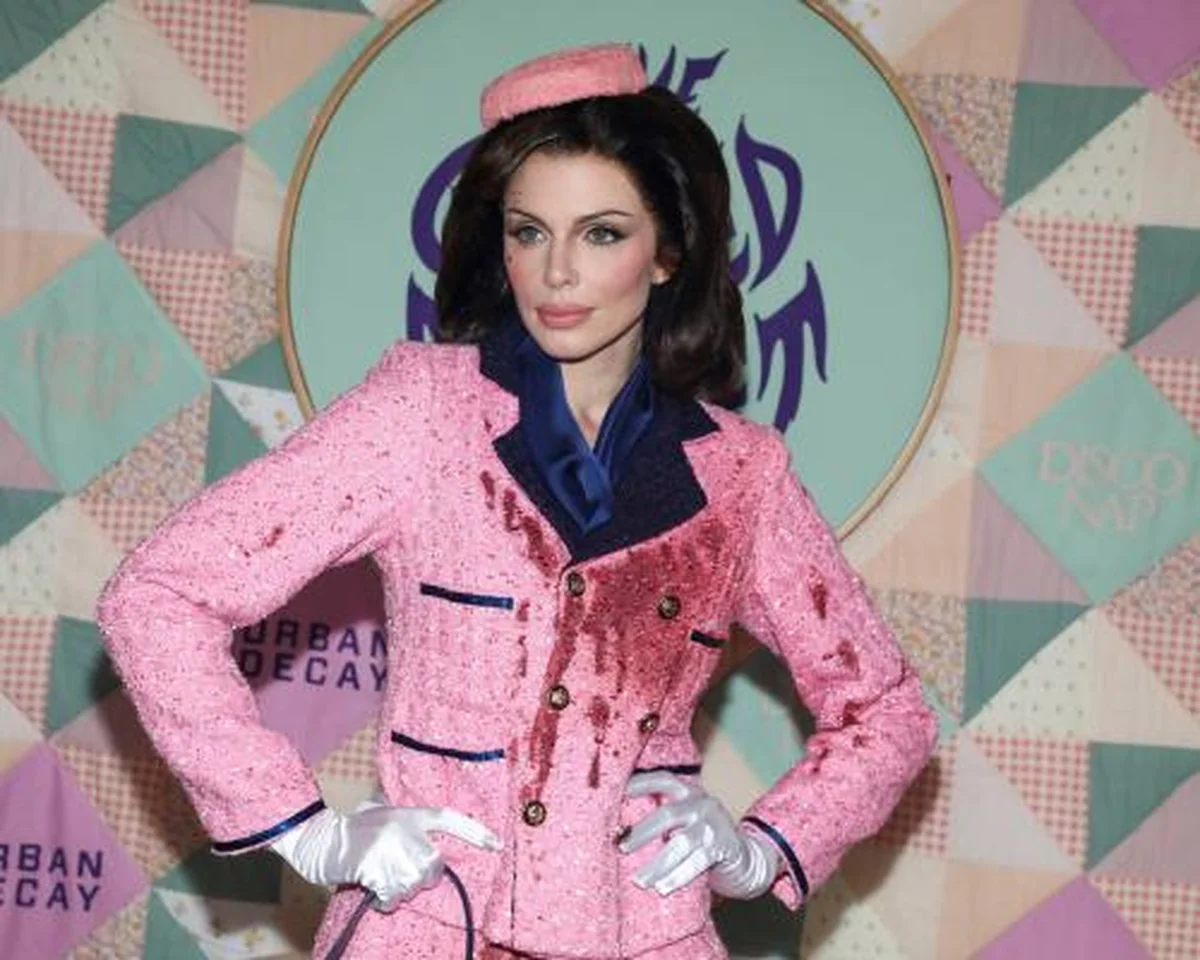
Julia Fox’s Bloody Jackie O Costume Draws Kennedy Family Ire
Actor Julia Fox has ignited a firestorm of controversy with her recent Halloween costume, a graphic recreation of former First Lady Jackie Kennedy’s blood-stained pink suit from the day President John F. Kennedy was assassinated. The provocative ensemble drew swift and severe condemnation, most notably from JFK’s grandson, Jack Schlossberg, who labeled the choice “disgusting, desperate and dangerous.”
The Controversial Ensemble
On October 30, Julia Fox, known for her roles in films like Uncut Gems, attended a Halloween celebration in New York City dressed in a replica of the iconic Chanel suit worn by Jacqueline Kennedy on November 22, 1963. That day, President Kennedy was fatally shot by a sniper while riding in a motorcade in Dallas, Texas, with his wife by his side. The image of the First Lady, smeared with her husband’s blood, has become one of the most haunting and indelible photographs in American history. Fox’s decision to replicate this tragic moment for a festive occasion quickly circulated online, prompting a wave of negative reactions across social media platforms like TikTok, where users widely dismissed the look as “a terrible idea” and “disrespectful.”
Kennedy Family’s Outcry
Among the chorus of critics, the voice of Jack Schlossberg resonated with particular gravity. The son of Caroline Kennedy and grandson of the late President and First Lady, Schlossberg took to X (formerly Twitter) to express his profound disapproval. His post read, in part: “Julia Fox glorifying political violence is disgusting, desperate and dangerous.” Schlossberg’s direct and unequivocal statement underscored the deep sensitivity and enduring pain surrounding the Kennedy assassination within the family, highlighting the perception that Fox’s costume trivialized a moment of national trauma and personal devastation.
Fox Defends Her “Statement”
Despite the significant backlash, including the pointed criticism from a direct descendant of the Kennedys, the 35-year-old actor and model remained unbowed. Julia Fox offered a robust defense of her costume choice, asserting via an Instagram post that her portrayal of Jackie Kennedy was “not as a costume but as a statement.” She elaborated on her interpretation, referencing the historical fact that after her husband’s assassination, Jackie Kennedy steadfastly refused to change out of her blood-stained clothes. Fox quoted the First Lady’s reported rationale: “I want them to see what they’ve done.”
Fox continued to explain her artistic intent, writing: “The image of the delicate pink suit splattered with blood is one of the most haunting juxtapositions in modern history. Beauty and horror. Poise and devastation. Her decision not to change clothes, even after being encouraged to, was an act of extraordinary bravery. It was a performance, protest, and mourning all at once. A woman weaponizing image and grace to expose brutality. It’s about trauma, power, and how femininity itself is a form of resistance. Long live Jackie O ♥️.” Her explanation sought to frame the controversial attire as a tribute to resilience and a commentary on power and resistance, rather than a mere costume.
Historical Context and Legacy
Indeed, historical accounts confirm that following the tragic events in Dallas, Jacqueline Kennedy did refuse to change her bloodied attire, even during the swearing-in of Lyndon B. Johnson aboard Air Force One. This act has long been interpreted by historians as a powerful, silent protest and a stark demonstration of the brutal reality of her husband’s death. Fox’s defense leverages this historical context, attempting to shift the narrative from one of insensitivity to one of profound artistic and political commentary, albeit one that remains deeply divisive.
The ongoing debate surrounding Julia Fox’s Halloween attire underscores the complex interplay between artistic expression, historical memory, and public sensitivities, particularly when touching upon deeply ingrained national tragedies and the enduring legacy of figures like Jacqueline Kennedy.
Source: The Guardian