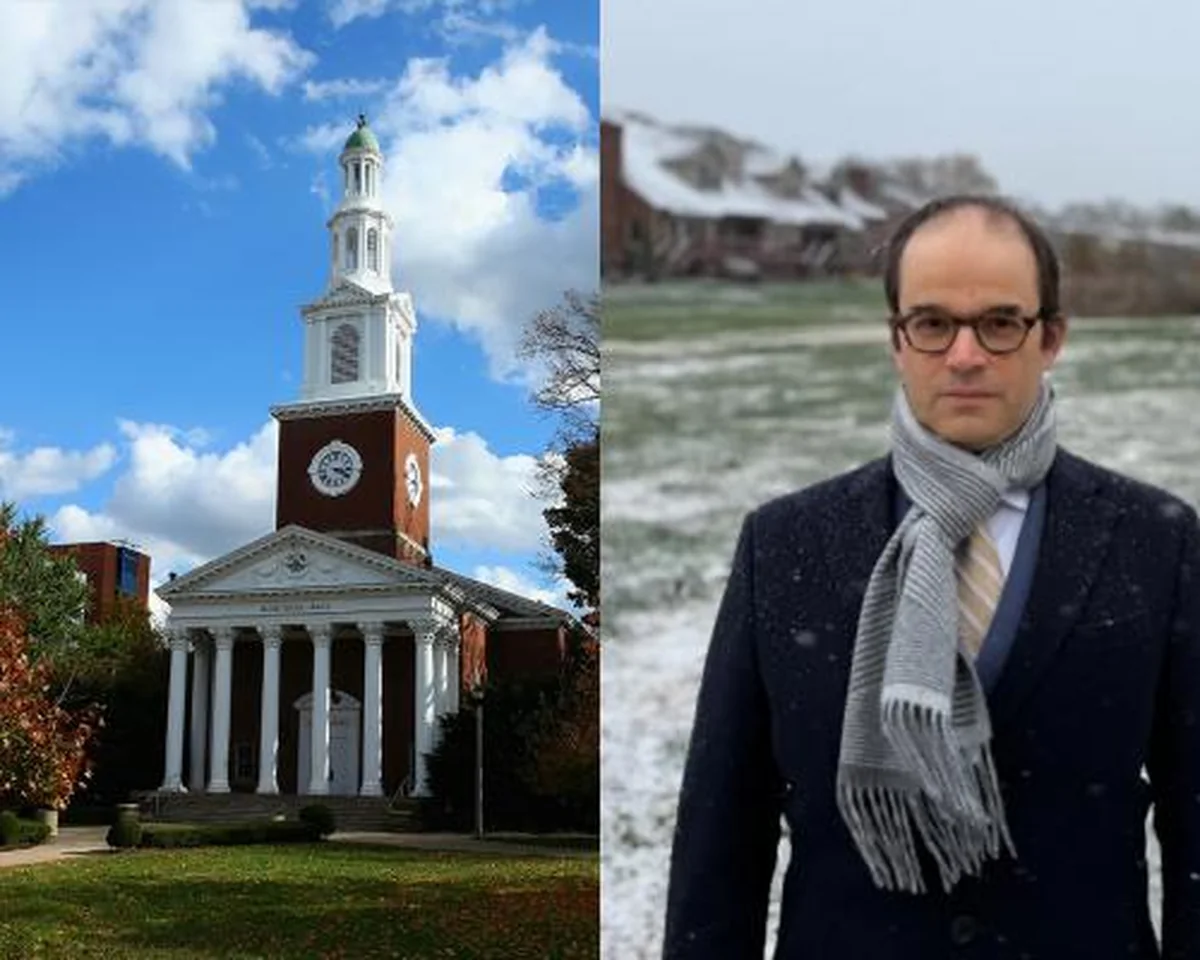
Tenured Professor Sues UK Over Israel Criticism Ban
A tenured law professor has initiated legal action against the University of Kentucky, alleging violations of his First Amendment and due process rights after the institution barred him from teaching and accessing the law school campus. The lawsuit, filed in federal court on Thursday, stems from comments made by Professor Ramsi Woodcock regarding Israel, which included characterizing the state as a “colonization project” and advocating for global action against it.
Woodcock, a distinguished scholar specializing in antitrust law, contends that the public university acted improperly by placing him under investigation in July. This move came just days after his promotion to full professor and was prompted by allegations of violating university policy, specifically anti-discrimination rules that incorporate a widely contested definition of antisemitism. His legal challenge marks a significant moment in the ongoing national debate over academic freedom and speech on college campuses, particularly concerning criticism of Israel.
Controversial IHRA Definition at Core of Dispute
The lawsuit is the latest development in a burgeoning controversy surrounding universities’ adoption and application of the International Holocaust Remembrance Alliance (IHRA) working definition of antisemitism. Critics argue that the definition, while intended to combat antisemitism, is often misapplied to stifle legitimate criticism of Israeli government policies. Over the past few years, numerous faculty members at both private and public institutions have faced investigations – and in some instances, termination or forced resignation – due to remarks about Israel deemed antisemitic under this framework.
Woodcock’s filing stands out as the first lawsuit brought by a professor that directly challenges the constitutionality of the IHRA definition itself. Furthermore, it explicitly questions the application of federal Title VI anti-discrimination protections to speech critical of Israel. The suit argues that such an interpretation unconstitutionally restricts free expression and academic inquiry.
Professor Reassigned Amidst Broad Restrictions
According to Jay Blaton, a spokesperson for the University of Kentucky, Professor Woodcock has not been suspended but rather “reassigned” pending the outcome of the ongoing investigation. However, the lawsuit details the extensive practical impact of this reassignment on Woodcock’s professional life. He has been prohibited from teaching courses, advising students, attending faculty meetings, and even entering the law school building.
The only remaining aspect of his job, as outlined in the lawsuit, is “professional development,” severely limiting his ability to perform his duties as a tenured academic. This effective ban, the suit contends, constitutes a significant infringement on his rights and livelihood, especially given his recent promotion.
Challenging Title VI and Academic Freedom
The core of Woodcock’s legal argument is encapsulated in a powerful statement within the lawsuit: “Title VI does not and cannot constitutionally prohibit criticism of Israel.” The filing further elaborates on its concerns, stating, “To the extent that the IHRA definition prohibits calling for the dismantling of colonial state structures, prohibits legal scholars from debating the contours of the right of self-determination…” it oversteps constitutional boundaries and impedes academic discourse.
This case is poised to become a critical test for academic freedom and free speech principles in higher education. It forces a direct confrontation between institutional policies designed to combat discrimination and the constitutional protections afforded to faculty members engaging in scholarly and political expression, particularly on highly sensitive geopolitical issues. The outcome could significantly shape how universities nationwide navigate the complex intersection of anti-discrimination efforts and First Amendment rights.
Source: The Guardian