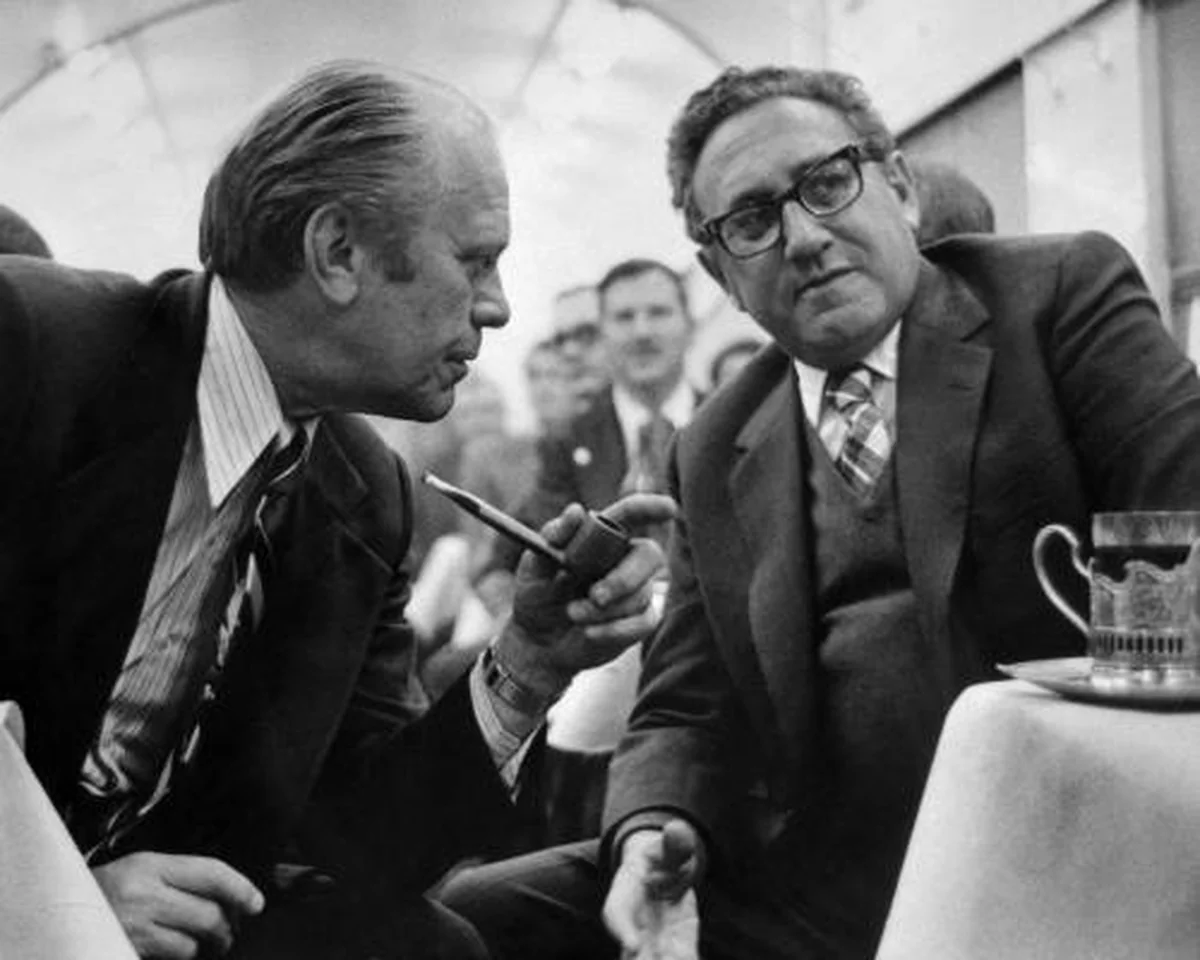
Ford White House Fought CIA Assassination Report
Newly declassified documents have brought to light a concerted effort by the Gerald Ford administration to obstruct a pivotal Senate investigation that exposed the Central Intelligence Agency’s involvement in schemes to assassinate foreign leaders. This landmark report, which ultimately spurred a sweeping overhaul of accountability within the U.S. intelligence community, is now receiving renewed attention five decades after its initial publication.
The 1975 records, made public on Thursday by the National Security Archive, an independent research organization, underscore the report’s enduring significance. Their release coincides with intense speculation regarding whether former President Donald Trump may have authorized the CIA to assassinate Venezuelan President Nicolás Maduro, amid a substantial U.S. military buildup near the South American nation. Trump has consistently declined to confirm or deny these allegations, though he did state in a recent CBS 60 Minutes interview that Maduro’s “days are numbered.”
Ford’s Stance on Publication
Among the cache of documents released by the National Security Archive is a “secret/sensitive” options paper directed to Dick Cheney, who served as Ford’s chief of staff at the time. This memo explicitly recommended outright opposition to the publication of the Senate report, which was spearheaded by Democratic Senator Frank Church.
The internal record confirms that President Ford endorsed this recommendation, indicating his “opposing publication of the report in its present form and stressing that the [Senate select] committee [chaired by Church] must assume responsibility for damage to the nation” that such a disclosure might allegedly inflict. The memo further suggested that robust White House opposition could potentially “persuade the committee to revise the most harmful areas of the report,” thereby mitigating perceived national security risks.
Key Officials’ Opposition
The newly unveiled documents also reveal the profound apprehension shared by high-ranking officials concerning the Church Committee’s investigations. William Colby, then the Director of Central Intelligence, and Henry Kissinger, who held the dual roles of Secretary of State and National Security Adviser, both expressed strong antipathy towards the Senate’s inquiries.
A memorandum detailing a conversation from February 1975, specifically addressing the Church investigation into the CIA’s domestic spying operations, captures Kissinger articulating his fears. He reportedly voiced concerns that the investigation “could be as damaging to the intelligence community as McCarthy was to the foreign servic…” This snippet highlights the deep-seated worry within the executive branch that the revelations could severely undermine the intelligence apparatus, drawing parallels to the contentious McCarthy era that targeted the State Department.
The historical parallels drawn by the National Security Archive between the Ford administration’s efforts to control intelligence disclosures and current geopolitical conjectures involving the CIA underscore the ongoing relevance of transparency and oversight in democratic governance. The enduring legacy of the Church Committee’s findings continues to shape debates about executive power and intelligence accountability.
Source: The Guardian