Tipsy Raccoon Discovered After Virginia Liquor Store Heist
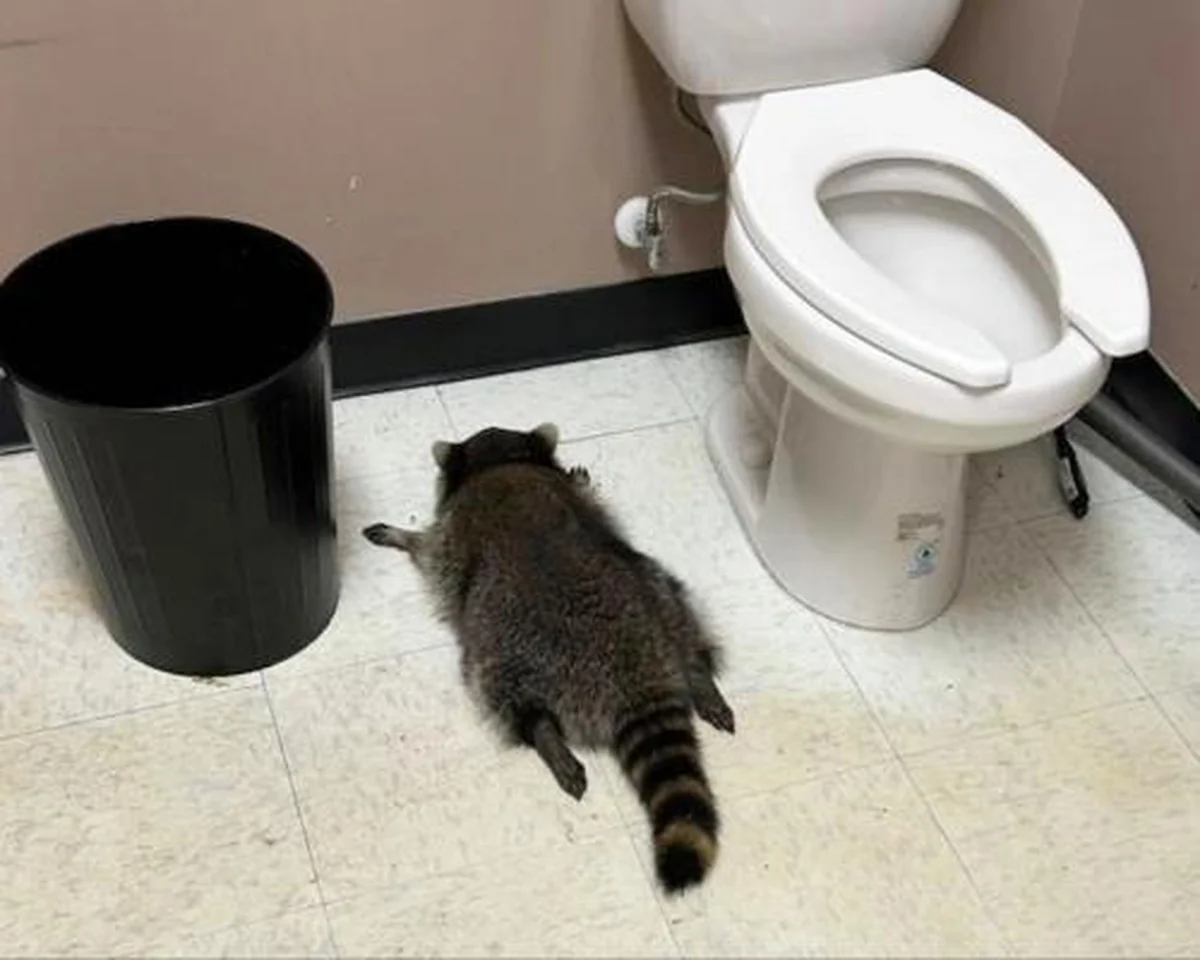
A Virginia liquor store became the scene of an unexpected and rather boozy encounter this past Saturday when an employee made a startling discovery. Amidst shattered whisky bottles on the shop floor, the worker ventured into the bathroom, only to find an uninvited guest: a raccoon, seemingly intoxicated, passed out and spread-eagled on the floor.
The furry culprit, it turned out, had quite the entrance. “He fell through one of the ceiling tiles and went on a full-blown rampage, drinking everything,” Samantha Martin, a local animal control officer, recounted to the Daily Mail. The incident quickly captured attention, highlighting the remarkable and sometimes mischievous adaptability of urban wildlife.
Authorities confirmed the raccoon’s inebriated state. The Hanover County animal protection and shelter agency later reported that the animal had successfully sobered up. “After a few hours of sleep and zero signs of injury (other than maybe a hangover and poor life choices), he was safely released back to the wild, hopefully having learned that breaking and entering is not the answer,” the agency humorously stated, underscoring the creature’s fortunate outcome.
Urban Raccoons: A Tale of Adaptation
This incident, while amusing, also sheds light on the incredible resilience and evolving nature of raccoons in human-dominated landscapes. A recent study revealed that raccoons living in urban areas are undergoing physical transformations, exhibiting traits that mirror early signs of domestication. These changes include shorter snouts compared to their wilder counterparts – a characteristic often observed in domesticated animal species.
Further physical shifts noted in these city-dwelling raccoons encompass smaller teeth, curlier tails, reduced brain size, and even floppier ears. Their remarkable success in coexisting with humans is largely attributed to their profound adaptability, particularly their ability to thrive on human refuse.
Thriving on Human Refuse
“Wherever humans go, there is trash,” Dr. Raffaela Lesch, an assistant professor of biology at the University of Arkansas at Little Rock, recently explained to The Guardian. “Animals love our trash. It’s an easy source of food. All they have to do is endure our presence, not be aggressive, and then they can feast on anything we throw away.” This readily available sustenance has allowed raccoons to flourish in urban environments, sometimes to the point of becoming local icons.
In Toronto, Canada, for instance, the raccoon population has become so pervasive that a popular local T-shirt slogan, “Toronto v Everybody,” has been widely replaced by one that humorously declares “Raccoons v Toronto,” reflecting their significant presence in the city’s daily life.
Alcohol in the Wild: A Natural Phenomenon
While a raccoon’s liquor store escapade might seem extraordinary, alcohol consumption is surprisingly common in the natural world. A recent scientific study confirmed its abundance across nearly every ecosystem. The research indicates that most animals that consume sugary fruits and nectar are likely to be regularly ingesting alcohol, as fermentation naturally occurs in these food sources.
The Virginia raccoon’s drunken misadventure serves as a vivid, albeit unusual, reminder of the complex interplay between wildlife, human environments, and the surprising elements present in nature. From adapting their very physiology to navigating urban challenges and even indulging in fermented treats, raccoons continue to prove themselves as resourceful, resilient, and sometimes very tipsy, survivors.
Source: The Guardian