Trump’s Tylenol Autism Claim Draws Fierce Backlash
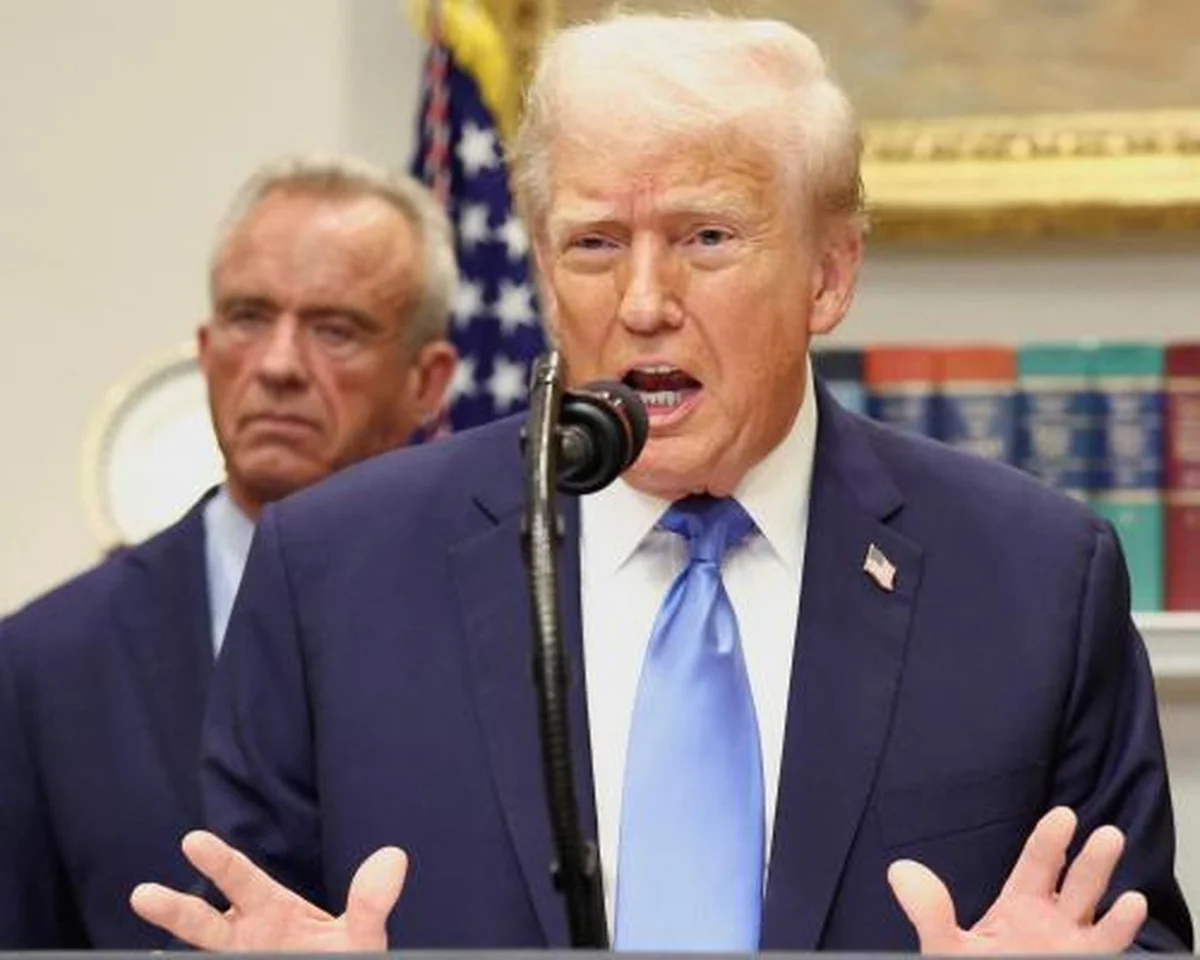
President Donald Trump’s unfounded assertions linking the pain reliever Tylenol (acetaminophen) to autism sparked widespread condemnation from medical and autism advocacy groups. The comments, made during a Monday press conference, preceded his address to the United Nations General Assembly. Trump’s remarks included unsubstantiated medical advice discouraging pregnant women from using Tylenol and urging caution regarding childhood vaccination schedules. His suggestions, including promoting leucovorin as an autism treatment, were immediately met with sharp criticism.
Unsubstantiated Medical Claims Ignite Controversy
“I want to say it like it is, don’t take Tylenol. Don’t take it,” Trump stated emphatically, further advising against administering what he called an excessive number of vaccines to infants. This advice, delivered without scientific backing, prompted immediate concern among healthcare professionals and patient advocacy organizations. The president’s pronouncements directly contradicted established medical consensus and existing research on both Tylenol and vaccine safety.
Medical Experts Condemn Trump’s Statements
The American Academy of Pediatrics, the American College of Obstetricians and Gynecologists, and numerous other organizations swiftly denounced the president’s claims. A statement from the Coalition of Autism Scientists, reported by Reuters, emphasized the lack of evidence supporting Trump’s assertions. The statement underscored the irresponsible nature of disseminating misinformation that could instill unwarranted fear and false hope in families affected by autism.
New York University bioethicist Arthur Caplan, speaking to the Associated Press, characterized Trump’s statements as “the saddest display of a lack of evidence, rumors, recycling old myths, lousy advice, outright lies, and dangerous advice I have ever witnessed by anyone in authority.” Caplan’s condemnation reflects the widespread outrage felt by the medical community regarding the president’s disregard for scientific accuracy and responsible public health messaging.
Impact on Public Health and Autism Community
The potential consequences of Trump’s unsubstantiated claims extend beyond the immediate controversy. The dissemination of inaccurate medical information can lead to harmful decisions regarding healthcare, potentially affecting both pregnant women and children. For the autism community, already grappling with misinformation and stigma, Trump’s comments represent a setback in efforts to promote accurate understanding and support.
Further Developments and Context
The controversy surrounding Trump’s statements unfolded against a backdrop of other news, including the return of Jimmy Kimmel Live! to ABC after a brief production suspension. While seemingly unrelated, the juxtaposition highlights the contrasting approaches to information dissemination and public responsibility. Kimmel’s show, known for its comedic yet often socially conscious commentary, stands in stark contrast to the president’s unsubstantiated and potentially harmful pronouncements.
The ongoing repercussions of Trump’s medical claims are likely to continue to be a significant area of focus for public health officials and medical professionals who are working to counter the spread of misinformation and protect the well-being of the public.
Source: The Guardian