Pfizer to Offer Discounted Drugs Through Federal Site
In a significant development poised to impact prescription drug access and affordability nationwide, Donald Trump announced on Tuesday that pharmaceutical giant Pfizer has committed to providing medications at “heavily discounted prices” through a forthcoming federal government-operated website. This landmark agreement also includes a crucial provision for Pfizer to extend “most favored nation” pricing to Medicaid, the vital public health insurance program designed to serve low-income Americans and other eligible individuals. This innovative pricing mechanism will effectively tie the cost of Pfizer’s drugs in the United States to the lowest prices paid for those same medications elsewhere in the world.
A New Federal Platform for Savings
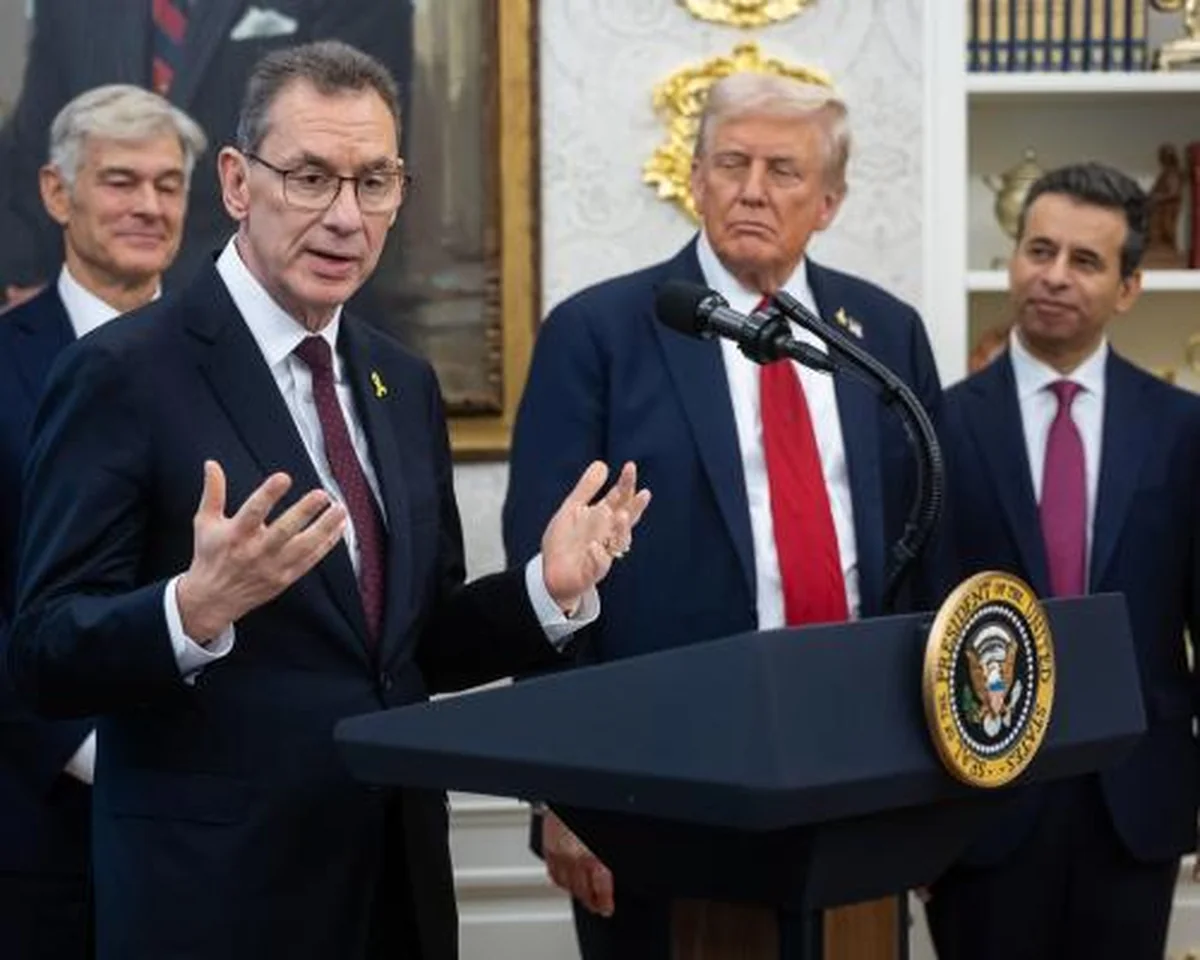
During a press conference held to unveil the initiative, Trump, flanked by Pfizer CEO Albert Bourla and U.S. Health Secretary Robert F. Kennedy Jr., underscored the profound financial implications for public health spending. “It’s going to have a huge impact on bringing Medicaid costs down like nothing else,” Trump asserted, highlighting the potential for substantial, unprecedented savings within the expansive government program. The discounted medications are slated to become available through TrumpRx.com, a dedicated online platform that, as of the time of the announcement, did not yet appear to be live or accessible to the public. Visual confirmation of the initiative was prominently shared on X by White House Press Secretary Karoline Leavitt, featuring a placard that boldly declared: “Prescription drugs with huge discounts will be available at TrumpRx.” The former president further indicated that his administration was actively engaged in discussions with other major pharmaceutical companies, aiming to secure similar beneficial pricing agreements.
Addressing Long-Standing Price Concerns
This pivotal announcement arrives after years of persistent and vocal criticism from Trump regarding the often-exorbitant cost of medications in the United States, a financial burden he has frequently attributed directly to the practices of drug manufacturers. Throughout his tenure, he consistently pledged to implement measures to drive down these expenses for American consumers. The urgent context for these efforts is stark: a comprehensive 2022 study conducted by the Rand Corporation revealed that prescription drug prices in the United States were almost three times higher than those observed across 33 other developed nations, underscoring a significant global disparity.
Pfizer CEO Albert Bourla, echoing a sentiment often heard in industry circles, suggested that other countries had not contributed their “fair share for the medical innovation. And as a result, Americans had to assume disproportional cost on their shoulders.” Bourla expressed strong optimism regarding the primary beneficiaries of this new agreement, asserting with conviction, “The big winner clearly will be the American patients, there is no doubt. They are the ones that will see a significant im…” His remarks unequivocally highlighted the anticipated, positive impact for U.S. consumers facing high drug costs.
Broader Health Policy Landscape
The timing of this significant pharmaceutical pricing breakthrough coincides with a period of heightened legislative tension in Washington, D.C., as the federal government teeters precariously on the brink of a potential shutdown. Against this backdrop, Democrats have vociferously criticized Republicans, accusing them of approving deep and damaging cuts to the vital Medicaid program and other essential health safety nets. Adding to the gravity of the situation, the Congressional Budget Office previously estimated that a Trump-backed bill, if enacted, could lead to an additional 16 million individuals becoming uninsured by the year 2034, further emphasizing the high stakes involved in the ongoing national healthcare debate. This new agreement aims to provide some measure of financial relief amidst these broader, complex policy challenges.
Conclusion
The commitment from Pfizer to offer substantial discounts and implement “most favored nation” pricing represents a notable and potentially transformative step in the ongoing national conversation about drug affordability. While the federal website, TrumpRx.com, is yet to fully launch, the explicit promise of reduced costs for both individual consumers and the expansive Medicaid program signals a potential paradigm shift in how prescription medications are accessed and priced within the United States. The administration’s stated intent to secure comparable deals with other leading drugmakers suggests that this could mark the beginning of a much broader, concerted effort to tackle the nation’s persistently high drug costs, offering hope for millions of Americans.
Source: The Guardian