‘Secretary of War’ Hegseth Address Sparks Veteran Outrage
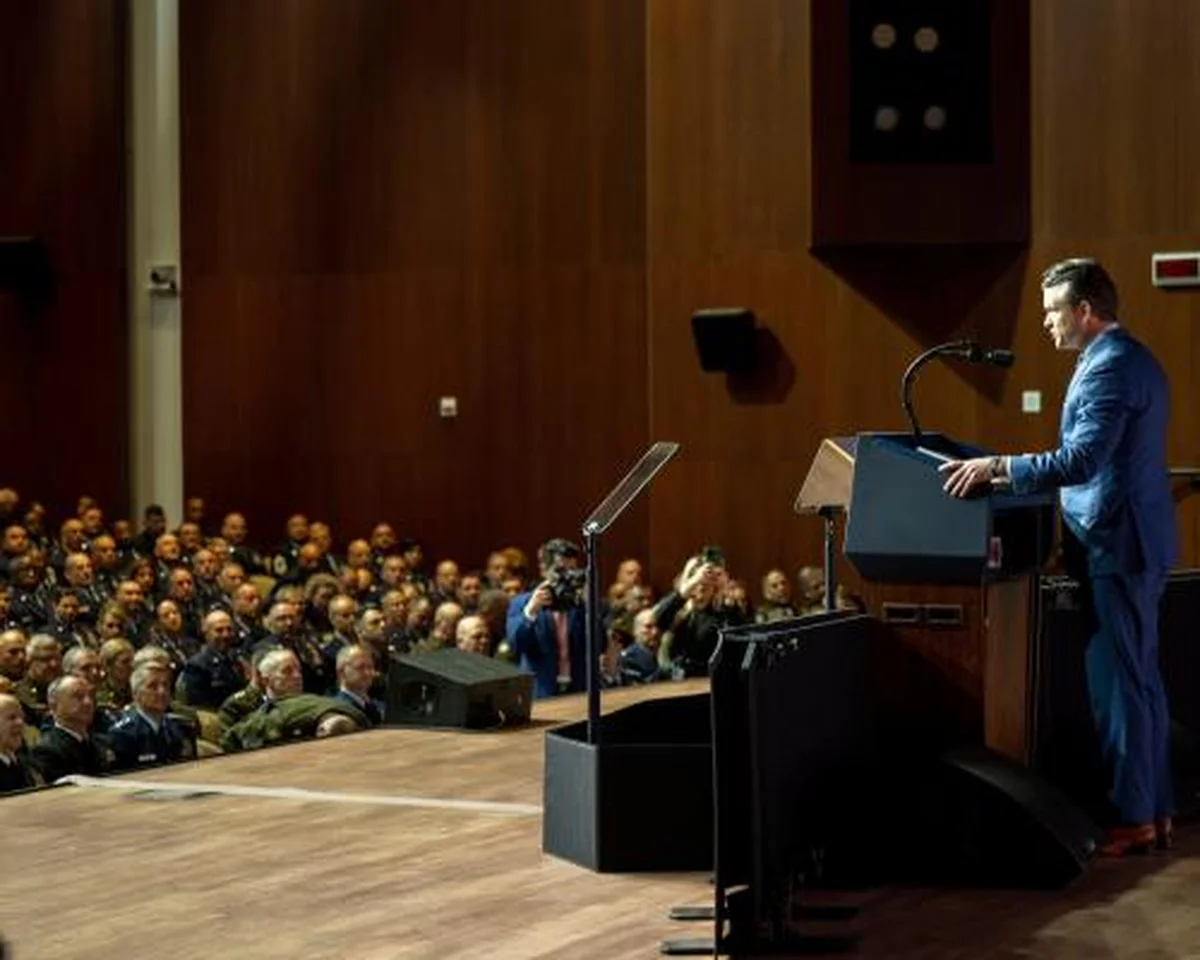
Pete Hegseth, recently designated as the “secretary of war,” delivered an hour-long address to a gathering of approximately 800 senior military leaders this past Tuesday, prompting a wave of indignation from the veteran community. His remarks, presented in a style reminiscent of a TED Talk, quickly became a flashpoint for criticism, with many former service members deeming them disrespectful and strategically unsound.
A Controversial Address
Among the most vocal critics was Naveed Shah, a veteran who served as an enlisted public affairs specialist—essentially an Army journalist. Shah, now the policy director for Common Defense, a prominent veterans advocacy organization, confessed to a rare struggle for appropriate words following Hegseth’s presentation. “A lot of the words that are coming to me aren’t fit to print,” Shah stated, emphasizing the profound offense taken by many.
Hegseth’s wide-ranging speech touched on topics from physical fitness standards and the concept of lethality to warnings about the perceived dangers of Diversity, Equity, and Inclusion (DEI) initiatives. While it certainly garnered significant attention, perhaps even overshadowing a subsequent, politically charged and rambling speech by Donald Trump, this notice came at a steep price: the erosion of respect. Shah underscored this point, asserting, “The people in that room who have served for 20, 30-plus years in uniform do not need Pete Hegseth to tell them about warrior ethos.”
“Insulting” Claims and Quota Rebuttals
Retired Army General Dana Pittard, who commanded troops in Iraq and co-authored Hunting the Caliphate, echoed Shah’s sentiments, finding the address deeply problematic. “I thought it was insulting,” Pittard declared, specifically rejecting Hegseth’s contentious assertion that senior officers of color—a group Pittard himself belongs to—had benefited from a non-existent quota system for promotions. Such claims, critics argued, not only lacked factual basis but also undermined the achievements of diverse military leaders.
Pre-Meeting Speculation and Logistical Queries
The unprecedented nature of the assembly itself, held under a shroud of secrecy at Marine Corps Base Quantico in Virginia, had already fueled extensive online discussion within military circles. Prior to the event, speculation ran wild, ranging from demands for a loyalty oath to the current administration or public dismissals of officers, to even a declaration of war. Some veterans wryly likened the mandatory, hour-long gathering of flag officers to a form of “karmic revenge” for the countless safety briefings unit commanders traditionally inflict before weekend leave.
Many also questioned the necessity and expense of such a high-level, in-person convocation, humorously suggesting it “could have been an email.” Shah further highlighted the questionable timing and logistics, remarking, “Certainly, addressing the troops could be useful or beneficial, but to call 800-plus generals and senior enlisted advisers from around the world into this room just before a government shutdown? It’s not just bad optics or strategy.” He then alluded to even graver risks, adding, “A bad cold could have threatened our entire chain of comm…”
The collective reaction from veterans and retired officers paints a clear picture of an address perceived not as a motivational call to arms, but as a condescending lecture that disrespected decades of service and experience. The logistical extravagance and the content itself have left a lasting impression of strategic misjudgment and a profound disconnect between the speaker and his esteemed audience.
Source: The Guardian