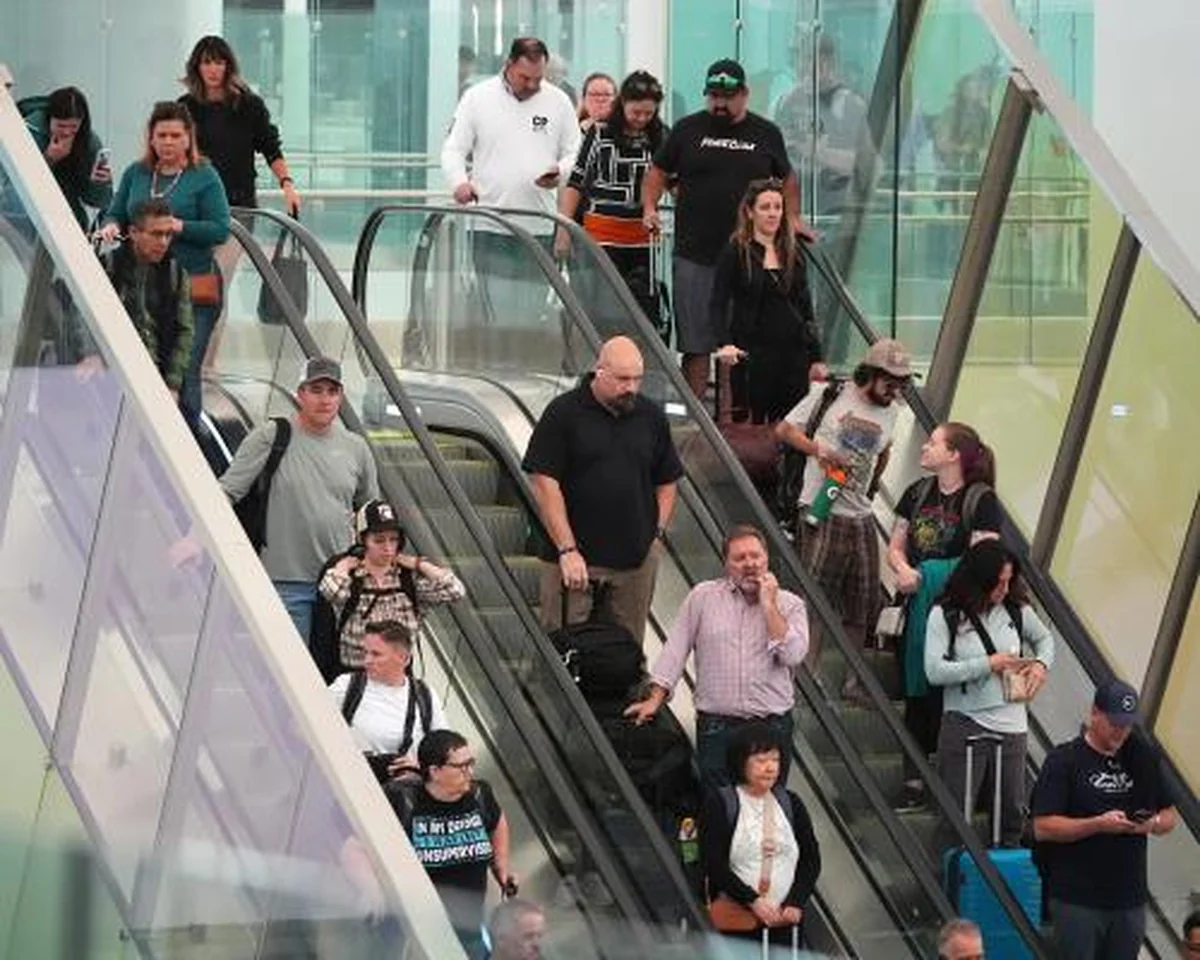
Federal Shutdown Strains US Air Traffic, Delays Flights
The ripple effects of the ongoing federal government shutdown continued to manifest in widespread flight delays across major U.S. airports on Tuesday, as crucial air traffic control (ATC) facilities grappled with severe staffing shortages. This operational strain, directly linked to the federal impasse, has significantly impacted air travel nationwide, raising concerns about the resilience of the nation’s aviation infrastructure.
### Widespread Disruptions Emerge
Monday saw the initial surge of disruptions, affecting key aviation hubs around New York, Los Angeles, and Denver. By the end of the day, more than 6,000 flights had been delayed throughout the United States. A particularly stark illustration of the crisis occurred in Southern California, where the air traffic control facility managing operations for Hollywood Burbank Airport in Los Angeles was forced to completely cease operations from Monday afternoon into the evening due to an insufficient number of controllers available. This localized closure highlighted the critical nature of the staffing crunch.
### Essential Workers, Unpaid Labor
Unlike many federal employees who have been furloughed during the shutdown, air traffic controllers are designated as essential personnel. This critical classification mandates their continued presence at work, ensuring the safety and flow of the nation’s airspace, despite the absence of regular paychecks. This unique predicament places immense financial and psychological pressure on a workforce vital to daily commerce and travel, compounding an already demanding profession.
Transportation Secretary Sean Duffy addressed reporters on Monday, acknowledging the mounting stress on these frontline workers. While asserting that the nation’s airspace remained secure for travelers, he conceded that a “slightly higher number” of controllers had reported sick since the government’s partial closure began. “Do I think they’re more stressed right now in our towers? Yes. Is our airspace unsafe? No,” Duffy stated, emphasizing a distinction between operational strain and inherent danger. He further underscored the department’s commitment to safety, affirming that any perceived issues in the airspace would lead to decisive action: “we will shut down, we will close it down, we will delay.”
### Union Highlights Deepening Strain
The National Air Traffic Controllers Association (NATCA), the union representing approximately 20,000 air traffic controllers across the country, issued a powerful statement detailing the extraordinary efforts of its members. The union highlighted that controllers frequently work “10 hours a day, 6 days a week” to ensure the safe arrival of “flights and their precious passengers and cargo.” NATCA condemned the shutdown, calling it an “unnecessary distraction” that “adds strain on a workforce that is already stretched thin working 24 hours a day, 7 days a week, operating the most complex airspace in the world.” The statement also drew parallels to the 2019 government shutdown, recalling how many controllers were compelled to “take second jobs to feed their families and pay their bills – leading to stress and fatigue.” This historical precedent underscores the long-term, detrimental impact of such financial uncertainty on a highly skilled and critical profession.
The ongoing federal government shutdown is not only testing the resilience of air traffic controllers but also exposing vulnerabilities within the nation’s critical infrastructure. As the political standoff continues, the safety and efficiency of air travel remain at the forefront of public concern, with the dedicated but unpaid workforce bearing the brunt of the crisis. The full extent of the shutdown’s impact on aviation, including programs like the Essential Air Service, continues to unfold, underscoring the broad consequences of the current political stalemate.
Source: The Guardian