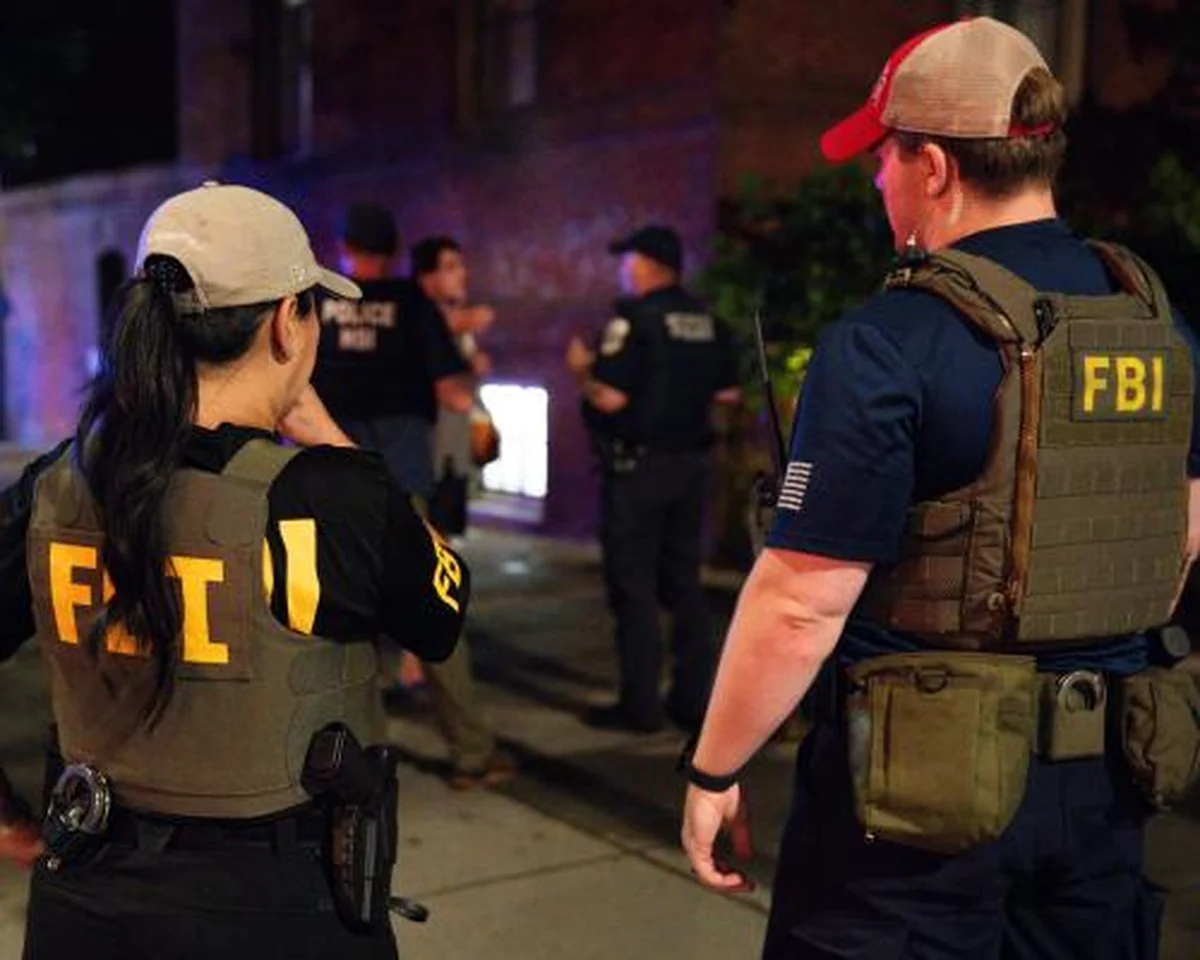
FBI Reassigns Key Agents to Immigration Enforcement
WASHINGTON – A significant redirection of federal law enforcement personnel is underway, with nearly half of the FBI agents stationed in the nation’s largest field offices now assigned to assist immigration enforcement efforts. This dramatic shift in priorities, revealed by recently disclosed data, has ignited widespread concern regarding national security and public safety implications.
According to information obtained by Senator Mark Warner (D-Va.) and shared with The Guardian, the Trump administration has redeployed a substantial 45% of FBI agents from the 25 most prominent field offices across the United States. Their new mandate is to bolster the Department of Homeland Security’s intensified immigration crackdown. Senator Warner, the leading Democrat on the Senate Intelligence Committee, further indicated that approximately 23% of the FBI’s entire force, totaling around 13,000 agents bureau-wide, are now dedicated to immigration-related duties.
A Dramatic Reallocation of Resources
This unprecedented reallocation means that highly trained FBI agents are being pulled from critical investigative areas to support immigration operations, primarily alongside Immigration and Customs Enforcement (ICE) agents. The data, initially reported by The Washington Post, underscores a profound reorientation of the FBI’s objectives, aligning with the administration’s increasingly aggressive stance on immigration. The administration’s ambitious goals include targeting 3,000 daily arrests and expanding its detention capacity to house more than 100,000 immigrants.
The implications of this strategic pivot are far-reaching. Senator Warner’s office highlighted that these agents were previously engaged in combating serious threats such as cybercrimes, drug trafficking, terrorism, espionage, violent crimes, and counterintelligence. These areas constitute the core mission of the bureau, and notably, some have been explicitly cited by President Trump as White House priorities. The diversion of personnel from these vital functions raises questions about the nation’s preparedness to address a spectrum of complex criminal and security challenges.
Understated Scope and Public Safety Warnings
Furthermore, Senator Warner’s analysis suggests that the official data may actually understate the full scope of this organizational overhaul. The FBI’s provided figures only account for agents who are dedicating more than half of their working hours to immigration enforcement. Warner’s office believes that a more accurate assessment would show that over a quarter of all FBI agents’ total hours are now committed to immigration-related tasks. In some specific field offices, the proportion of agents redirected to DHS efforts is estimated to exceed 50%.
The senator voiced stark warnings about the potential fallout. “When you pull a quarter of the FBI’s top agents off the front lines of fighting terrorists, spies, drug traffickers, and violent criminals, the consequences are clear: critical national security work is compromised,” Warner stated. This bold move represents a stark departure from traditional law enforcement priorities, signaling a profound shift in how federal resources are being deployed to address perceived national threats. The long-term impact on the bureau’s effectiveness and the country’s security landscape remains a subject of intense debate and scrutiny.
Source: The Guardian