Federal Judge Blocks Trump’s Chicago National Guard Order
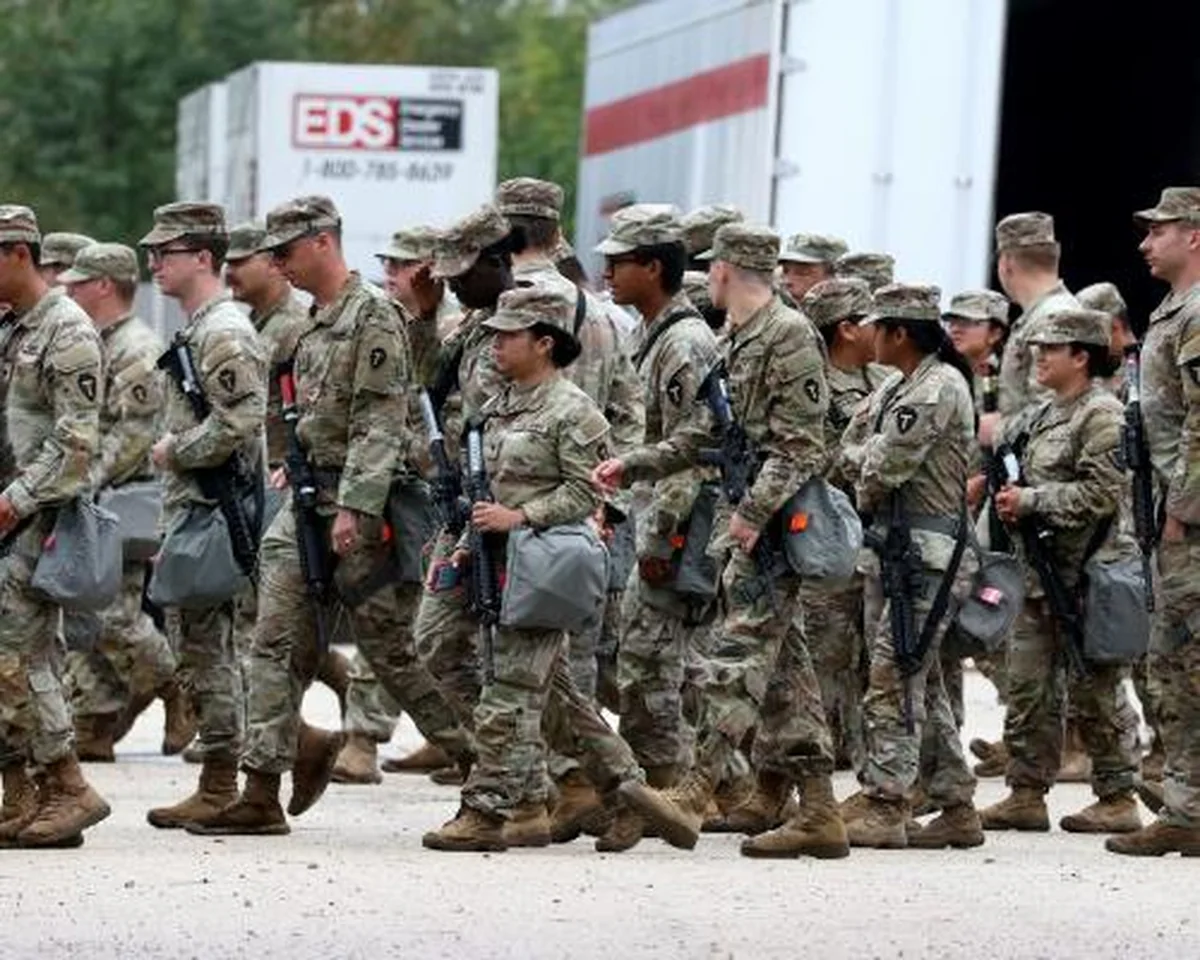
A federal district judge on Thursday issued a temporary injunction against the Trump administration, preventing the deployment or federalization of National Guard troops in Illinois. The ruling came after President Donald Trump ordered hundreds of military personnel to Chicago, citing aims to bolster immigration enforcement and combat what the White House described as elevated crime rates within the city.
U.S. District Judge April Perry delivered her decision from the bench following more than two hours of intense legal arguments. Lawyers representing the federal government and the state of Illinois, which had initiated a lawsuit challenging the proposed deployment, presented their cases. The judicial order took immediate effect on Thursday and is slated to remain in force for a period of two weeks.
Judicial Intervention in Federal-State Dispute
Reporters present in the courtroom noted Judge Perry’s assertion that she had “seen no credible evidence that there is a danger of a rebellion in the state of Illinois.” This statement underscored the court’s skepticism regarding the administration’s stated rationale for the troop mobilization.
Illinois Governor JB Pritzker, a vocal critic of the federal plan, promptly released a statement echoing the court’s stance. “Donald Trump is not a king – and his administration is not above the law,” Pritzker declared. Quoting Judge Perry, he further added, “Today, the court confirmed what we all know: there is no credible evidence of a rebellion in the state of Illinois. And no place for the National Guard in the streets of American cities like Chicago.”
Chicago Mayor Brandon Johnson, who was present for the court proceedings, hailed the ruling as a significant victory. He characterized the outcome as a “win for the people of Chicago and the rule of law,” and pledged that the city would “continue to use all of the tools at our disposal to end the Trump administration’s war on Chicago.”
Arguments in Court
Attorneys representing the state of Illinois had previously labeled the federal government’s intention to send National Guard soldiers into the city – a move vehemently opposed by both Chicago and state political leaders – as a potential “constitutional crisis.” State attorney Christopher Wells highlighted the administration’s determination, stating, “The government plowed ahead anyway. Now, troops are here.”
Illinois and Chicago, both governed by Democratic elected officials, have consistently argued that President Trump exceeded his constitutional authority and disregarded their repeated pleas to keep the National Guard off city streets. They contend that such a deployment without state consent infringes upon state sovereignty.
Conversely, Eric Hamilton, a justice department lawyer, presented the federal government’s perspective, asserting that the Chicago area was plagued by “tragic lawlessness.” His arguments aimed to justify the necessity of federal intervention to address public safety concerns and crime rates in the metropolitan area.
Temporary Reprieve, Ongoing Conflict
The temporary blocking of the National Guard deployment marks a significant, albeit interim, legal victory for Illinois and Chicago. It underscores the ongoing tension between federal and state authorities, particularly when state leaders are from an opposing political party. The two-week injunction provides a brief reprieve and sets the stage for further legal battles over the scope of presidential power in deploying military assets within states.
Source: The Guardian