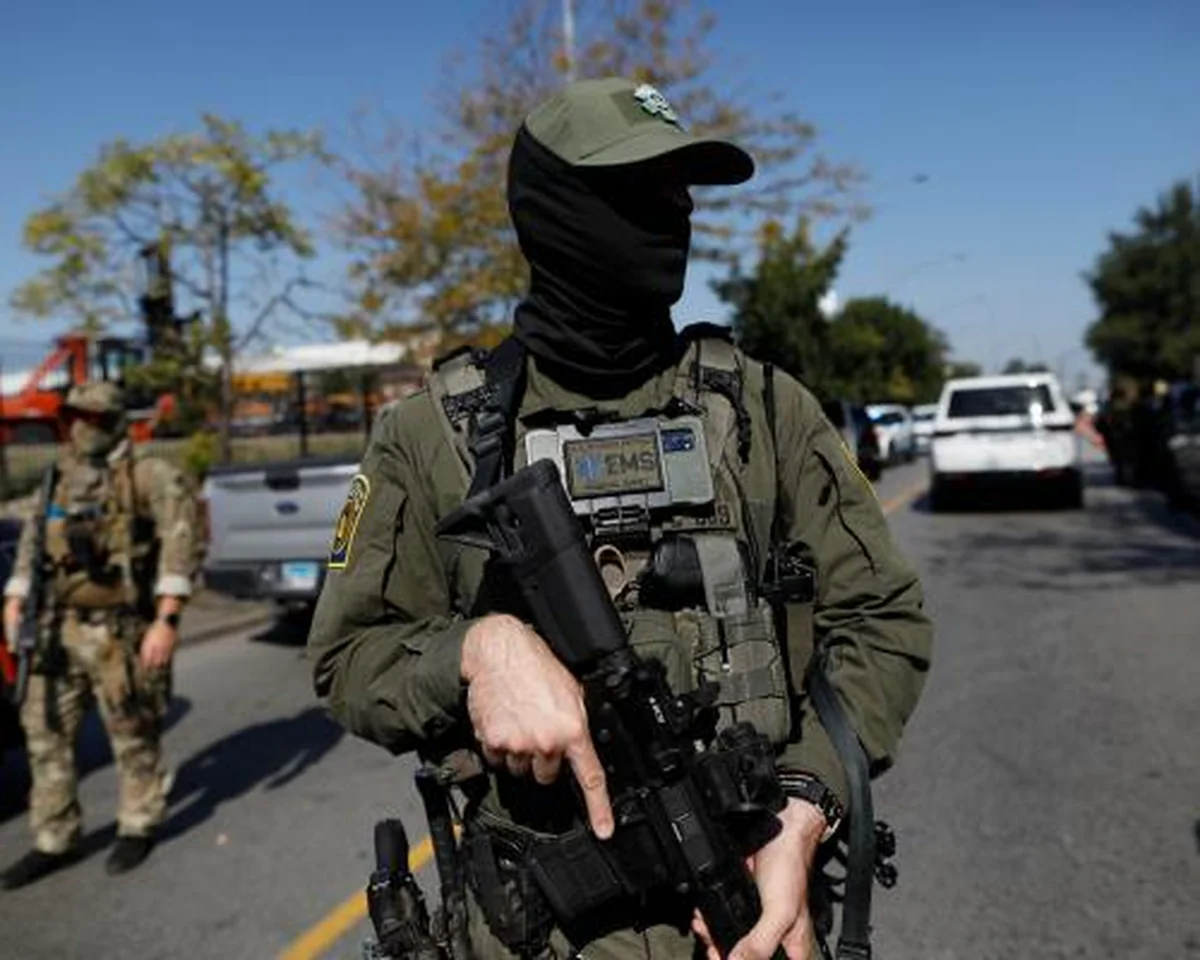
Federal Border Agents Expand Urban Reach, Spark Alarm
Federal agents from U.S. Customs and Border Protection (CBP) are increasingly observed operating far beyond traditional border zones, functioning as key enforcers of the Trump administration’s sweeping immigration policies. This expanded presence, characterized by what critics describe as aggressive tactics, is raising significant concerns among civil liberties advocates and legal experts. They worry that an agency primarily trained for border security is now deploying its methods in diverse urban communities across the nation.
Under the leadership of Gregory Bovino, a particularly hardline CBP sector chief from southern California, Border Patrol agents have established a noticeable daily presence in several major U.S. cities. This marks a significant shift from their historical operational focus, which traditionally centered on the immediate vicinity of the nation’s borders.
Escalating Incidents Spark Outcry
The agency’s deeper foray into urban areas has been accompanied by a series of high-profile incidents that have drawn sharp criticism. Earlier this month, in Chicago’s Southwest Side, a Border Patrol agent reportedly shot a woman multiple times amidst protests against the Trump administration’s militarized immigration raids in the city. This event further intensified the debate over the appropriate scope and nature of federal immigration enforcement within urban centers.
Last summer in Los Angeles, residents witnessed a striking display of federal power when Border Patrol agents on horseback, accompanied by National Guard troops and other agents in military-style vehicles, swept through a public park downtown. The sight of armed federal personnel conducting patrols in a civilian recreational area underscored the dramatic shift in the agency’s operational footprint.
Further south in California, viral videos captured Border Patrol agents pinning down and beating Narciso Barranco, a 48-year-old landscaper. Such footage has fueled public outrage and intensified scrutiny of the agents’ conduct. Beyond these flashpoints, agents have also conducted arrests in California’s agricultural Central Valley and at immigration courthouses in New York, while setting up immigration checkpoints in Washington D.C., demonstrating a broad geographic expansion of their activities.
Suitability for Urban Enforcement Questioned
Lawyers and human rights advocates are vocal in their assertion that Border Patrol agents, whose training focuses on interdicting illegal entries, drug smugglers, and human traffickers at the country’s perimeters, may be fundamentally ill-suited for civil immigration enforcement within bustling urban environments. Their concerns revolve around the agents’ training, which traditionally emphasizes rural and isolated operations rather than community interaction.
“The border patrol is certainly quite cavalier, and has been very aggressive historically as it goes about its enforcement responsibilities,” stated César Cuauhtémoc García Hernández, a law professor at Ohio State University. He elaborated, “They tend to do their work in rural places and isolated parts of the United States. And they generally are not trained in community interactions and policing.” This lack of specialized urban policing training raises critical questions about accountability and appropriate engagement with civilian populations.
Historically, CBP’s Border Patrol division largely confined its operations to areas near the southern U.S. border, particularly along the southwestern frontier. However, the Department of Homeland Security has long possessed the legal authority, stemming from a 1946 statute, to conduct patrols further inland. The current administration has leveraged this existing legal framework to dramatically broaden the agency’s operational reach, transforming their role from border guardians to a more visible presence in American cities. This expansion continues to provoke intense debate over federal power, civil liberties, and the future of immigration enforcement in the United States.
Source: The Guardian