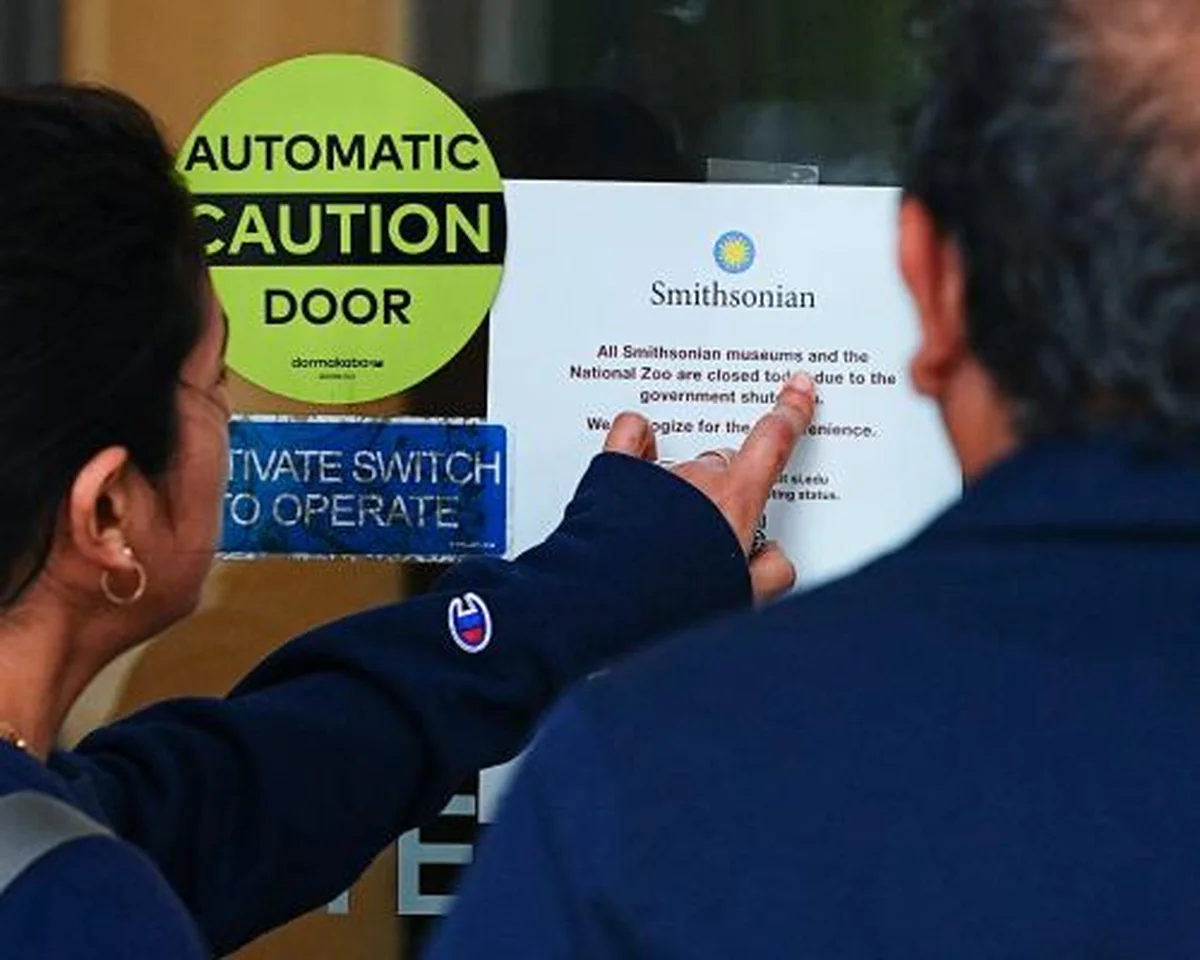
Nation’s Capital Cultural Hubs Close Amid Shutdown Standoff
Washington D.C.’s iconic Smithsonian museums and the beloved National Zoo have temporarily shuttered their doors, effective Sunday, in a direct consequence of the ongoing federal government shutdown. The closures mark a significant impact on the nation’s capital, affecting millions of visitors and researchers.
The Smithsonian Institution, headquartered in Washington D.C., issued a public statement over the weekend confirming the temporary cessation of operations for its extensive network of museums, pivotal research centers, and the National Zoo. This decision comes as the government funding lapse stretches into its third week, with no immediate resolution in sight.
Operational Status and Digital Access
“We will update our operating status as soon as the situation is resolved,” the Smithsonian Institution announced. The statement clarified that while physical locations are inaccessible, social media channels would only be utilized for critical updates regarding operational changes. For those seeking engagement with the institution’s vast collections and knowledge, digital resources remain fully accessible online at si.edu, ensuring a continued connection to its educational offerings.
A primary concern for many revolves around the welfare of the animals housed at the National Zoo and the Smithsonian Conservation Biology Institute in Front Royal, Virginia. The institution unequivocally assured the public that all animals would continue to receive diligent feeding and care, irrespective of the shutdown’s duration. “A shutdown will not affect our commitment to the safety of our staff and standard of excellence in animal care,” the statement emphasized, reaffirming its dedication to animal welfare.
However, a visible casualty of the closure is the National Zoo’s popular live animal cameras. These digital windows into the lives of the zoo’s inhabitants have been deactivated, as they are classified as non-essential services. Their operation and broadcast require federal resources, primarily staff, which are currently unavailable due to the funding freeze.
The Smithsonian’s Vast Reach and Recent Scrutiny
Established in 1846, the Smithsonian Institution stands as the world’s largest museum and research complex. Its sprawling footprint encompasses 21 museums, 14 education and research centers, alongside the National Zoo, collectively serving as a global beacon of culture, science, and history.
The institution has not been immune to political scrutiny in recent years. Since Donald Trump assumed office in January, the Smithsonian Institution has faced criticism from the White House regarding what it described as “improper, divisive or anti-American ideology.” This critique escalated in August when then-President Trump took to Truth Social, stating: “The Smithsonian is OUT OF CONTROL, where everything discussed is how horrible our Country is, how bad Slavery was, and how unaccomplished the downtrodden have been.”
Earlier this year, the White House also communicated its intention to review various exhibitions, materials, and operations within the institution. This comprehensive review is slated to occur in advance of the United States’ 250th-anniversary celebrations next year, with the stated aim of ensuring the museums’ exhibits align with patriotic narratives.
As the government shutdown persists, the closure of these vital cultural and scientific establishments serves as a stark reminder of the broader impact of federal funding impasses on public services and national treasures.
Source: The Guardian