Trump Claims Credit for Crime Drop Amid Pre-Existing Trends
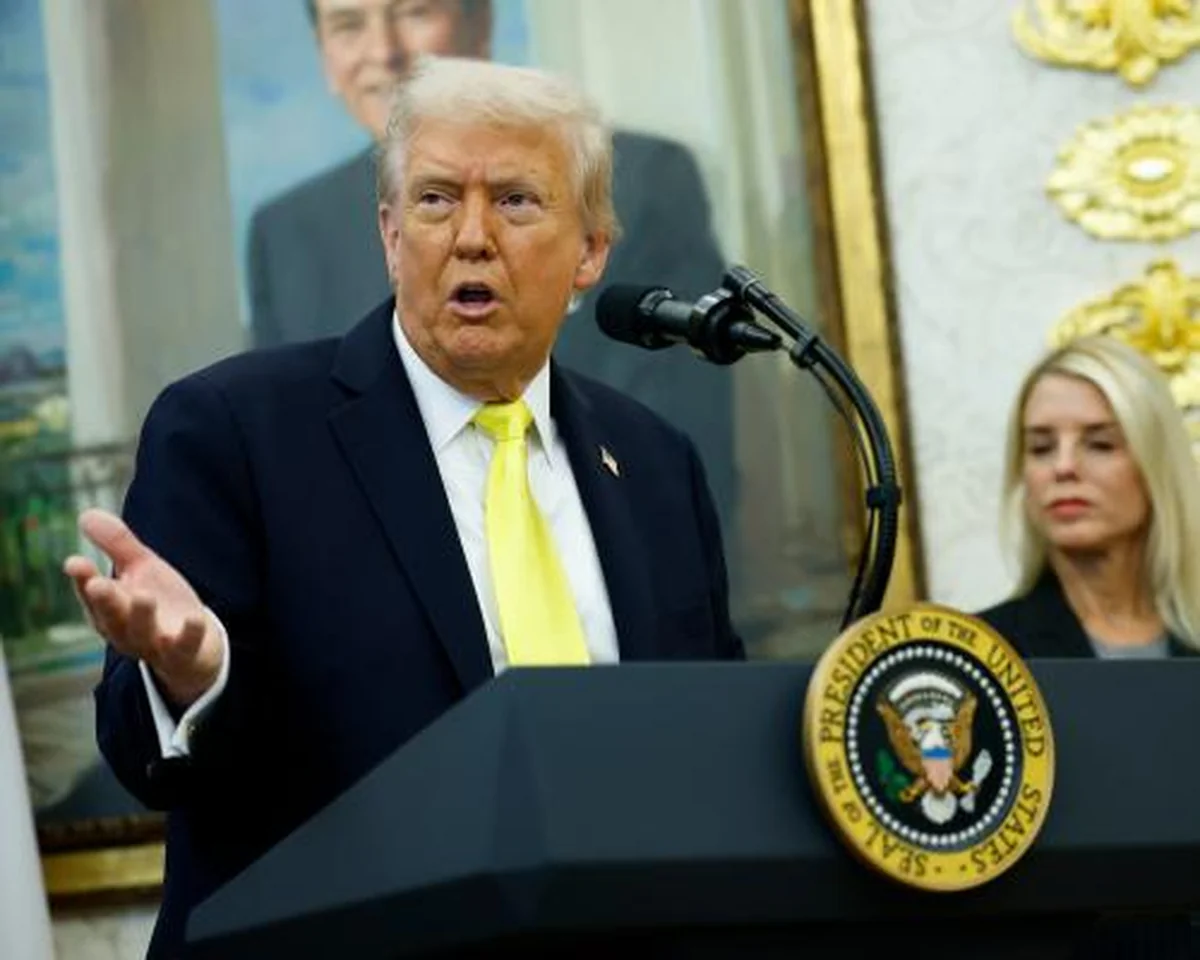
WASHINGTON D.C. – President Donald Trump held a press conference Wednesday, asserting responsibility for a significant decline in violent crime across the nation, an improvement that data indicates was already underway prior to his administration’s stepped-up federal interventions.
During the briefing, the President articulated a personal commitment to public safety, stating, “I campaigned on crime, but I never thought we would go into every city and take a really safe city that we’ve all been living with for years and make it safe. And now it’s a passion for me. I did get elected for crime, but I didn’t get elected for what we’re doing.”
Federal Initiatives Highlighted
Flanked by key law enforcement officials, including FBI Director Kash Patel, Attorney General Pam Bondi, and Deputy Attorney General Todd Blanche, President Trump spotlighted the federal government’s increased role in policing. He specifically referenced a federal takeover of law enforcement operations in Washington D.C. and the substantial number of arrests made by federal agents under “Operation Summer Heat.”
Director Patel described “Operation Summer Heat” as a three-month initiative designed to significantly increase arrests of wanted fugitives nationwide. While similar in concept to seasonal surges conducted by agencies like the U.S. Marshals Service in prior years, its reported scope appears considerably broader. President Trump declared, “As a result of these efforts, violent crime declined nearly 20% nationwide compared to the same period last year. And it was the safest and most peaceful summer in the last two decades.”
Questioning the Narrative: Pre-Existing Declines
However, the administration’s narrative faces scrutiny when juxtaposed with existing crime statistics. Data reveals that violent crime began its precipitous decline in major U.S. cities as early as 2022 and continued through 2023. By the time President Trump was inaugurated in January, crime rates had already fallen to levels not seen in nearly 60 years.
Despite these established trends, the President has consistently cited the perceived threat of crime in urban centers as justification for deploying extraordinary federal law enforcement resources. This includes, most recently, the deployment of National Guard troops to Memphis, Tennessee, last week, alongside federal agents.
Memphis Intervention Under Scrutiny
Referencing the situation in Memphis, President Trump suggested imminent, dramatic improvements. “In a little while, you’re going to see some numbers that you’re not going to believe,” he said. “I think you’re probably start with Memphis because I’m hearing the numbers are much quicker than we even thought possible.”
Yet, local data from Memphis indicates that violent crime has been on a downward trajectory for the past year. Furthermore, the Memphis Police Department issued a public statement on September 9 – predating the arrival of the federal Memphis Safe Task Force and National Guard deployment – outlining existing crime reduction progress.
The press conference underscores an ongoing debate about the actual drivers of crime reduction and the role of federal intervention versus local efforts, particularly when national crime trends show a sustained decline independent of recent federal surges.
Source: The Guardian