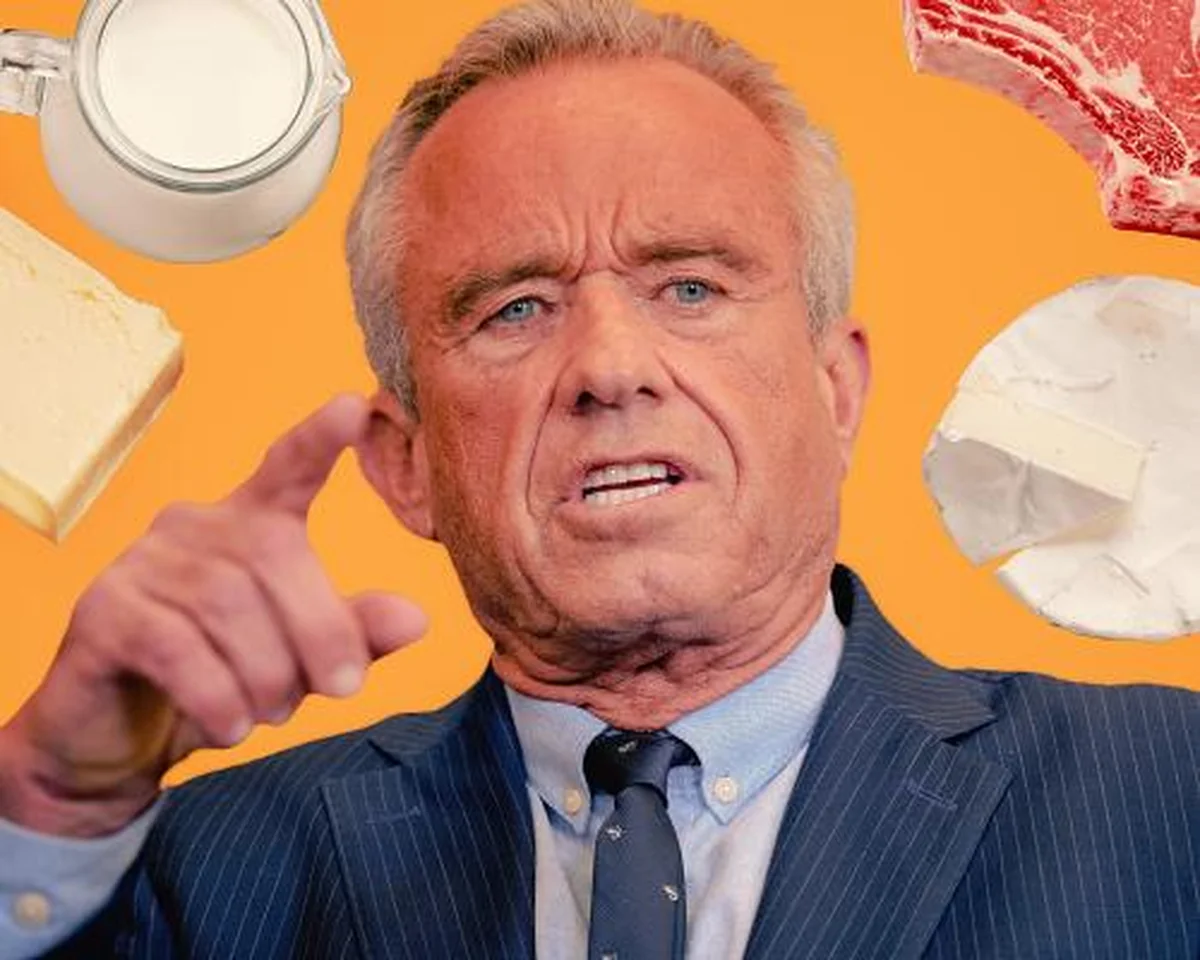
RFK Jr. Proposes Saturated Fat Boost, Experts Wary
In a move poised to ignite significant debate within the public health community, Robert F. Kennedy Jr., slated to become the Secretary of Health and Human Services (HHS), is reportedly preparing to issue new dietary recommendations that advocate for increased consumption of saturated fats. This proposed guidance stands in stark contrast to decades of established nutritional advice, prompting concern among leading health professionals.
Cheryl Anderson, a prominent board member of the American Heart Association and a professor at the University of California, San Diego’s school of public health and human longevity science, expressed a measured but clear apprehension. “My response and sort of counsel to myself was to stay calm, and let’s see what happens, because there was no indication given as to how, why, when this potential shift would occur,” Anderson stated. She emphasized the enduring nature of current guidelines, noting, “The recommendation around saturated fat has been one of the most consistent recommendations since the first edition of the dietary guidelines.”
A Controversial Dietary Shift
Kennedy’s intentions, as reported by The Hill, suggest a significant departure from conventional wisdom. He has indicated that forthcoming dietary guidelines will “stress the need to eat saturated fats of dairy, of good meat, of fresh meat and vegetables… When we release those, it will give everybody the rationale for driving it into our schools.” This vision of integrating higher saturated fat intake into national school programs marks a potentially transformative shift in public health policy.
Nuanced Research vs. Broad Recommendation
The discussion around saturated fats has evolved in recent years, with some research offering more nuanced perspectives. Ronald Krauss, a professor of pediatrics and medicine at the University of California, San Francisco, has conducted extensive research in this area. His work indicates that saturated fats might be “relatively neutral” when compared to earlier scientific beliefs. However, Krauss cautions against a broad endorsement of increased intake.
“If [Kennedy] is actually going to go out and say we should be eating more saturated fat, I think that’s really the wrong message,” Krauss asserted. His studies highlight that the health impact of reducing saturated fat is highly dependent on what replaces it. Replacing saturated fats with unsaturated alternatives, such as olive oil and other plant-based polyunsaturated fats, can significantly improve metabolic health and decrease the risk of heart disease. Krauss clarified, “but that’s not saying that saturated fat is necessarily harmful.”
Crucially, Krauss’s research also found that substituting saturated fats with sugars and refined carbohydrates can actually increase heart disease risk, underscoring the complexity of dietary choices. This distinction is vital in crafting public health messages, as simply encouraging more saturated fat without context could have unintended consequences.
Potential Impact on Public Health
The proposed guidance from the HHS Secretary-designate sets the stage for a major re-evaluation of American dietary habits. With experts like Anderson and Krauss highlighting the long-standing consensus and the nuanced scientific understanding of fats, Kennedy’s push for increased saturated fat consumption is likely to remain a contentious issue, carrying significant implications for national health policy and public understanding of nutrition.
Source: The Guardian