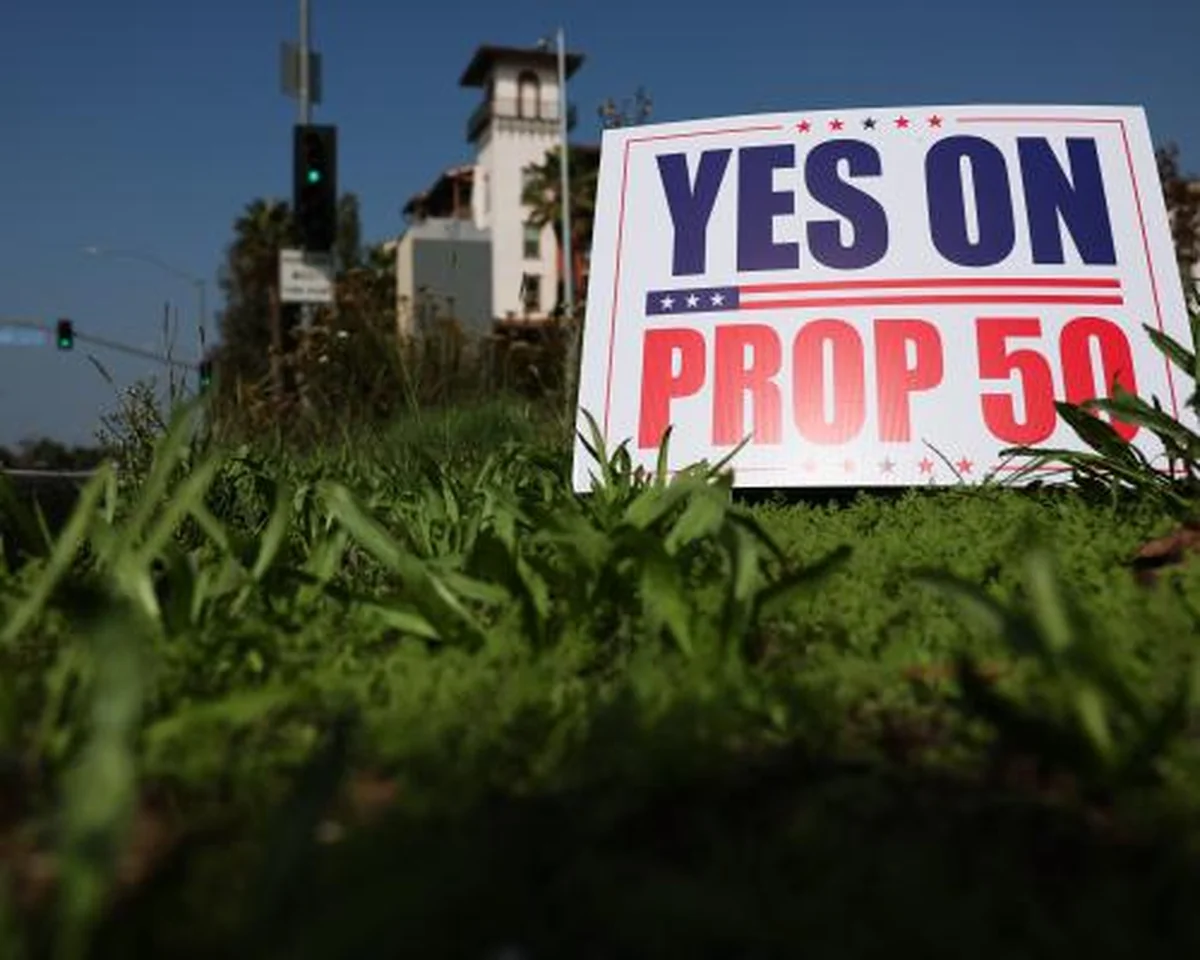
California’s Prop 50: A Blue State’s Redraw to Check Trump
California voters are on the verge of approving a landmark redistricting measure, Proposition 50, which has been framed as a direct challenge to former President Donald Trump and Republican efforts to consolidate power. What began as a stern warning from the nation’s most populous blue state to Texas, its largest red counterpart, escalated after the Lone Star State proceeded with an unusual mid-decade gerrymander, reportedly encouraged by Trump, to bolster a precarious Republican House majority ahead of midterm elections.
The Golden State quickly made good on its earlier pronouncements. Democrats, alongside Governor Gavin Newsom, placed Proposition 50 on the August ballot, positioning it as a critical opportunity to curb Trump’s influence. Governor Newsom did not mince words when formally unveiling the initiative, dubbed the Election Rigging Response Act, at a public rally. “California will not sit idle as Trump and his Republican lapdogs shred our country’s democracy before our very eyes,” Newsom declared, underscoring the high stakes involved.
A Retaliatory Measure for Congressional Control
Proposition 50 asks Californians to temporarily set aside the state’s existing, independently drawn congressional district boundaries. In their place, new maps would be implemented, specifically designed to secure five additional safe seats for Democrats. This move is a direct tit-for-tat response to actions taken in Texas earlier this year, where Republicans successfully carved out five new districts more favorable to their party.
The ballot measure represents a significant shift in political strategy, turning the often-technical process of redistricting into a highly politicized battleground. Historically, district line adjustments occur at the start of each new decade following the census. This current, accelerated timeline highlights the urgency and perceived threat driving California’s Democratic leadership.
Voter Engagement and Outlook
Voting in the Golden State has been active for several weeks, with a strong showing from the electorate. As of Saturday, nearly six million ballots had been returned, representing approximately one in four of the total ballots initially mailed out, according to data tracked by Political Data Inc. The special election is set to conclude on Tuesday, November 4.
Early returns and various opinion polls indicate that Proposition 50 is well on its way to a comfortable victory. Despite the inherent challenges in forecasting turnout for an off-year special election, multiple recent surveys suggest the measure is poised to pass by a margin exceeding 20 points. This strong support can largely be attributed to the focus on Trump, which has energized the Democratic base within the deeply blue state.
This galvanization has successfully averted what some political observers initially feared: that the complex, often esoteric debate surrounding the minutiae of redistricting might fail to capture public interest. Instead, the narrative has been squarely centered on national political power dynamics and the perceived threat to democratic processes.
National Democratic leaders have thrown their full support behind California’s retaliatory plan. Their closing campaign advertisement features prominent figures such as former President Barack Obama, Governor Newsom, and several influential congressional Democrats, including a notable representative from New York.
Source: The Guardian