Cheney’s Echo: How a VP Forged Trump’s Executive Power
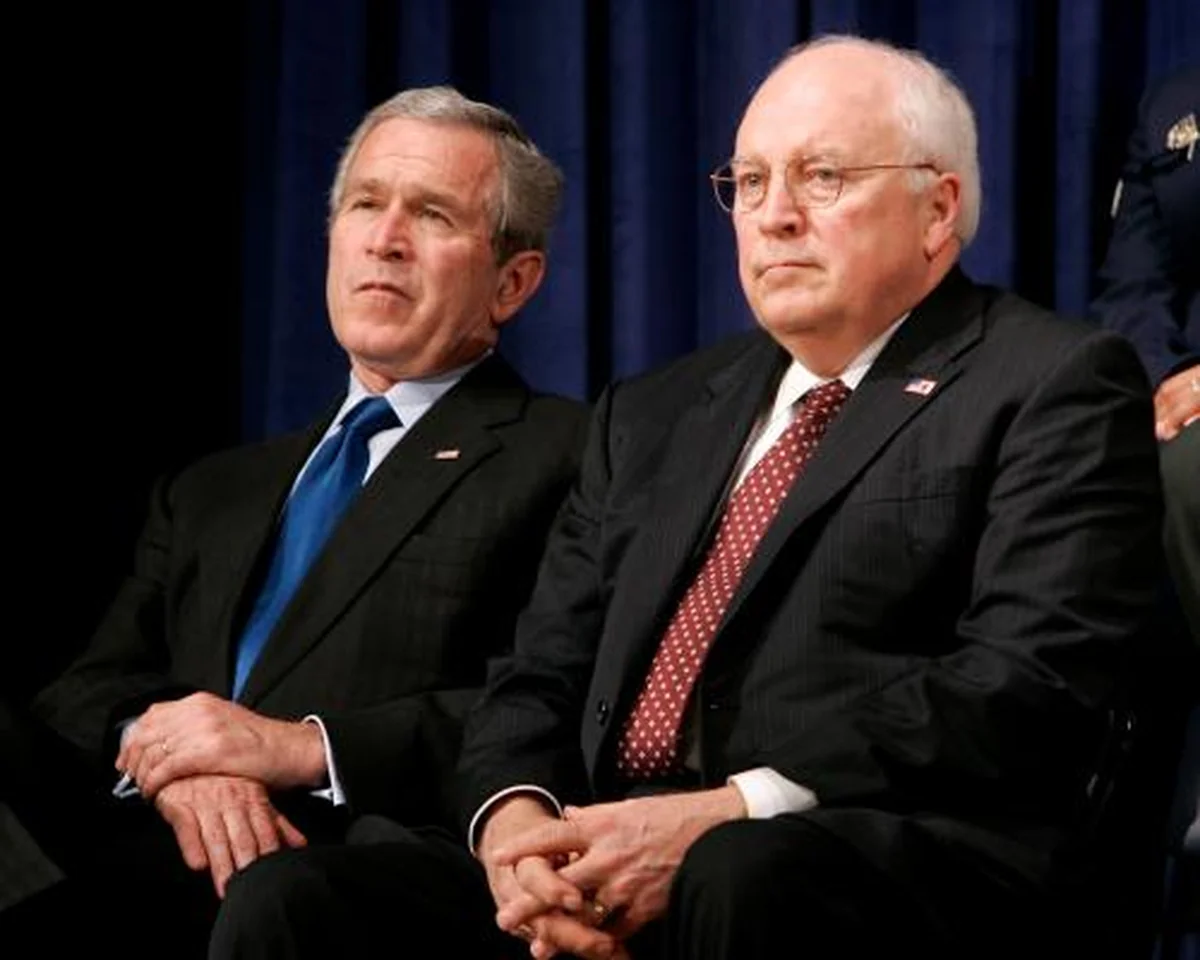
Richard “Dick” Cheney, a figure who profoundly shaped American foreign policy and the presidency itself, recently passed away at the age of 84. In his final years, Cheney was an outspoken critic of Donald Trump, denouncing the former president as a danger to the very republic he dedicated his life to. Yet, paradoxically, many political observers contend that Cheney inadvertently paved the way for the expansive, often controversial, executive authority that Trump later wielded.
The White House marked Cheney’s passing by lowering flags to half-mast, a traditional gesture, but conspicuously omitted the customary public proclamation or announcement praising the deceased former official. This subtle deviation underscored the complex and often polarizing nature of Cheney’s nearly five-decade career in public service.
A Legacy of Expanded Power
Serving as Vice President under George W. Bush for eight years, Cheney established himself as one of the most impactful and divisive figures in U.S. political history. He faced enduring criticism, particularly for his role in advocating for the 2003 invasion of Iraq, which critics argue was based on faulty intelligence. However, his later strong opposition to Donald Trump was seen by some as offering a measure of atonement.
Perhaps Cheney’s most enduring, and indeed most debated, contribution was the significant augmentation of presidential powers – an office he never personally held. Following the devastating September 11, 2001, terrorist attacks, Cheney seized the moment to champion a more assertive and less constrained executive branch. This included justifying actions that dramatically reinterpreted the boundaries of presidential authority, often under the guise of national security.
The Direct Line to Trump’s Presidency
Commentators increasingly draw a direct connection between the policies enacted during the Bush-Cheney era and the subsequent actions of the Trump administration. Policies such as the justification for pre-emptive military action, widespread warrantless surveillance, and the creation of new legal classifications like “enemy combatant” are viewed as precursors. These foundational shifts, critics argue, provided a blueprint that Donald Trump then amplified and exploited, frequently challenging the constitutional system of checks and balances.
Larry Jacobs, director of the Center for the Study of Politics and Governance at the University of Minnesota, succinctly articulated this connection. “Dick Cheney is the godfather of the Trump presidency,” Jacobs stated. “Trump is unchained because Dick Cheney had been at war for half a century against the restraints put in place after Vietnam and Watergate. He believed that action was more important than following constitutional rules.”
This perspective suggests that Cheney’s relentless pursuit of a more powerful executive, driven by a conviction that decisive action superseded strict adherence to constitutional limits, ultimately created the fertile ground for Trump’s own assertive presidential style.
Historical Context: The Imperial Presidency
The discourse surrounding the balance of power between the executive, legislative, and judicial branches did not originate with Cheney. As early as 1973, historian Arthur Schlesinger Jr. published his seminal work, *The Imperial Presidency*. In it, Schlesinger argued that the American executive branch had, over time, begun to accumulate power, increasingly resembling a monarchical institution rather than a co-equal branch of government. Cheney’s actions, therefore, can be seen as a significant chapter in this ongoing historical narrative, one that continues to shape the nature of American governance.
Cheney’s legacy remains a complex tapestry of public service, controversy, and profound influence. His vision for a robust executive, forged in the crucible of post-9/11 America, undeniably cast a long shadow, influencing the very landscape of presidential power that Donald Trump would later inherit and dramatically reshape.
Source: The Guardian