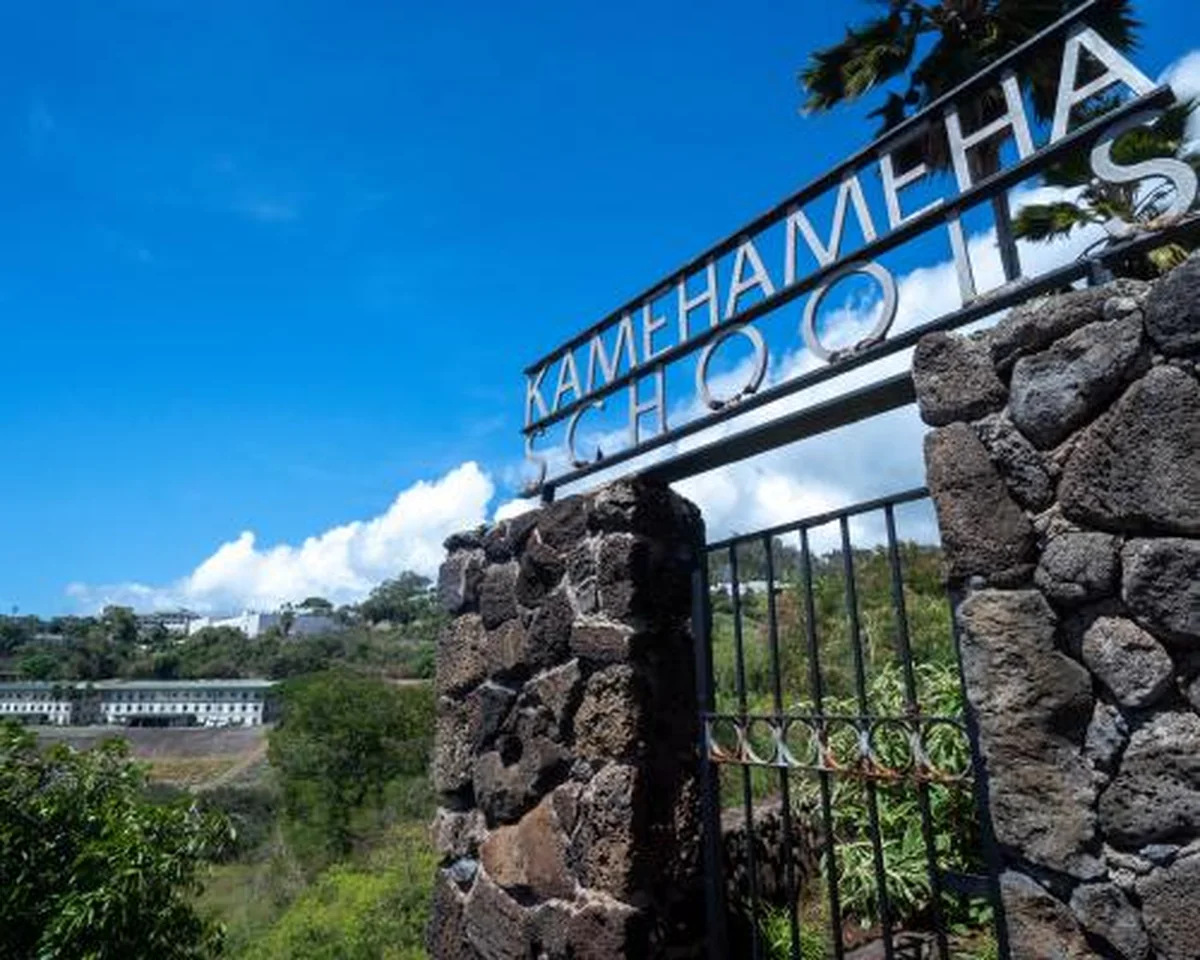
Hawaiian Princess’s Legacy Under Attack: Schools Sued
HONOLULU – The enduring vision of a Hawaiian princess, who dedicated her vast inheritance to uplift her people, is now at the center of a legal battle. Advocates for the private educational system she founded, Kamehameha Schools, are vehemently opposing a new lawsuit that targets its admissions process, calling it a direct affront to the nearly 140-year-old wishes of Princess Bernice Pauahi Bishop.
The lawsuit is viewed by proponents of the schools as a cynical attempt to dismantle a foundational institution established to secure a brighter future for Native Hawaiians, a population that faced existential threats during the princess’s lifetime.
A Royal Bequest for Future Generations
Kamehameha Schools owes its existence to the last royal descendant in the Kamehameha line, Princess Bernice Pauahi Bishop. Her will, penned before her death in 1884, stipulated the creation of these schools, endowing them with her substantial estate. At the time, her inheritance comprised an astonishing 9% of the entire Hawaiian island chain’s acreage.
The princess, great-granddaughter of Kamehameha I, envisioned an educational sanctuary built upon these lands and properties. Her foresight laid the groundwork for a unique institution designed to serve the specific cultural and educational needs of the Native Hawaiian community.
Kamehameha Schools: A Pillar of Hawaiian Education
Today, Kamehameha Schools stands as a formidable educational network, encompassing three K-12 campuses and 30 preschools across the islands. Its curriculum is deeply rooted in Hawaiian culture-based education, nurturing approximately 5,400 students annually.
The institution boasts an endowment of roughly $15 billion, a financial strength that surpasses all but about ten of the most prestigious universities in the United States. Notably, Kamehameha Schools operates without any federal government funding, maintaining its independence and mission focus. Admission is exceptionally competitive across all grade levels; for instance, only about one in five high school applicants are accepted.
Beyond its academic rigor, the schools are committed to accessibility, subsidizing approximately 92% of the total education cost for their students. Furthermore, nearly 80% of the student body receives some form of financial aid based on demonstrated need, ensuring that economic barriers do not hinder deserving Native Hawaiian children from accessing this unique educational opportunity.
Historical Imperative Behind the Foundation
Jon Osorio, the dean of the Hawaiʻinuiākea School of Hawaiian Knowledge at the University of Hawaii, emphasizes the critical historical context of the schools’ establishment. “The Kamehameha schools were established at a time when the Native Hawaiian population was still on the decline,” Osorio noted.
In the late 1880s, the Native Hawaiian population was estimated at only about 50,000, a stark contrast to the 300,000 to half a million people living on the islands at the time of European contact. This demographic crisis coincided with a period of intense political vulnerability for the Hawaiian Kingdom. “The kingdom itself was really in a precarious kind of place, particularly because the United States was becoming more and more interested in securing a permanent base at Pearl Harbor,” Osorio explained, highlighting the dire circumstances that underscored the princess’s philanthropic act.
The current lawsuit reignites a long-standing debate over the scope and intent of such ethnically specific trusts, challenging a legacy that has profoundly shaped Native Hawaiian education for generations. Advocates remain steadfast, asserting that upholding the princess’s original intent is crucial for the cultural and educational continuity of her people.
Source: The Guardian