Federal Judge Permanently Blocks Guard in Portland
PORTLAND, OR – A federal judge in Oregon delivered a decisive blow to the Trump administration’s efforts to deploy federalized National Guard troops in Portland, issuing a final order Friday that permanently bars such intervention. U.S. District Court Judge Karin Immergut, an appointee of the former president, concluded there was insufficient evidence of widespread unrest to justify federal military presence in the city.
Judge Immergut’s ruling stems from ongoing legal challenges against the administration’s attempts to quell protests, particularly around Portland’s Immigration and Customs Enforcement (ICE) facility. Her order solidifies a preliminary injunction issued earlier in the week, reinforcing the court’s stance that the protests had not spiraled out of control prior to the president’s move to federalize troops.
Court’s Findings on Portland Protests
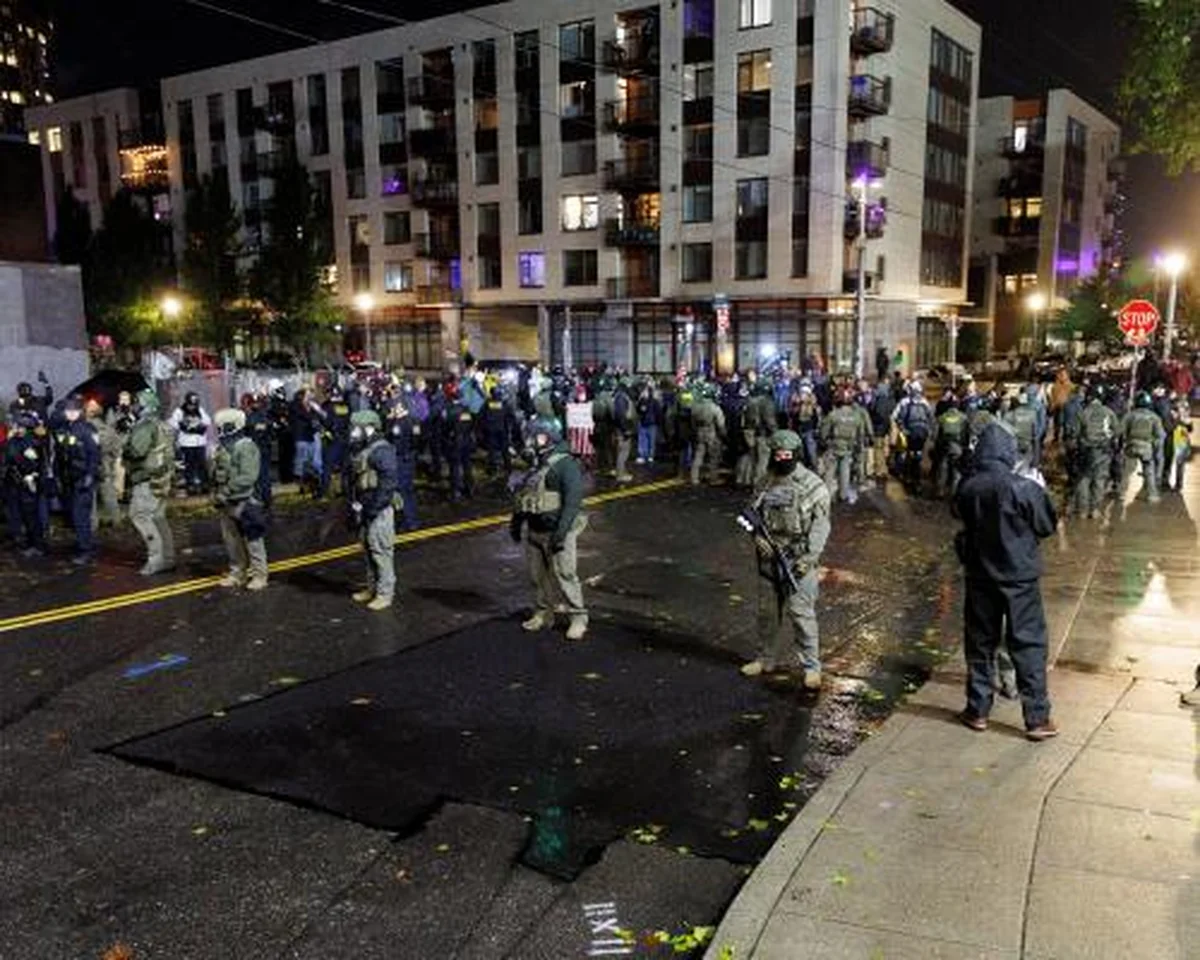
In her detailed findings, Judge Immergut characterized the demonstrations near the ICE complex as “predominately peaceful.” She noted that instances of violence were “isolated and sporadic,” generally involving “relatively low-level” altercations. Critically, the judge observed that most confrontations occurred between protesters and counter-protesters, rather than directly involving federal agents.
This assessment contradicted the administration’s narrative of widespread anarchy requiring federal intervention. The court had previously found “no credible evidence” to support claims that the city’s protests had become unmanageable, leading to the initial temporary ban on National Guard deployment in Oregon. The judge’s final order reinforces this finding, painting a picture of largely contained dissent rather than pervasive lawlessness.
Legal Battle Escalates Across US Cities
The Portland ruling marks a significant development in a series of legal skirmishes between the Trump administration and various U.S. cities. Over several weeks, the administration had sought to federalize and deploy National Guard units in urban centers like Portland and Chicago, aiming to suppress protests that it deemed disruptive or violent.
The ICE facility in southwest Portland has been a flashpoint for demonstrations since June, when local authorities declared one protest a riot. The city of Portland, alongside the state of Oregon, initiated legal action against the Trump administration in September. This lawsuit came after the president announced his directive to the Defense Department to federalize and deploy the Oregon National Guard, prompting the earlier temporary restraining order from Judge Immergut, which the administration subsequently appealed. The judge presided over three days of witness testimony before reaching her final decision.
Jurisdictional Nuances Addressed
Judge Immergut carefully navigated the complexities of judicial authority in her ruling. She acknowledged the potential limitations of her court’s jurisdiction “to enjoin President Trump in the performance of his official duties.” However, her injunction specifically targets the Defense Secretary, Mark Esper, and the acting Homeland Security Secretary, Chad Wolf, prohibiting them from deploying National Guard members to Oregon.
This strategic approach allows the court to enforce its order by directing federal officials responsible for military deployment, thereby circumventing direct confrontation with presidential powers while still achieving the desired outcome of preventing federalized Guard presence in the state.
The comprehensive ruling by Judge Immergut underscores the judiciary’s role in scrutinizing executive actions, particularly when they involve the deployment of military forces within domestic borders. For activists and local officials in Portland, the decision represents a substantial legal triumph, affirming local control over public order and challenging the federal government’s broad claims of authority during civil unrest.
Source: The Guardian