Senate Progresses Funding Bill to End Record Shutdown
The United States Senate on Sunday took a pivotal step toward resolving the nation’s longest-ever government shutdown, narrowly advancing a meticulously crafted compromise bill. This legislative effort aims to restore federal funding and reverse the terminations of some government employees, bringing a potential end to a 40-day fiscal impasse that has gripped Washington. However, the measure, forged over days of intense bipartisan negotiations, notably omits crucial healthcare subsidies, a key demand from Democrats, setting the stage for a contentious battle in the House of Representatives.
### A Bipartisan, Yet Contentious, Path Forward
The procedural vote in the Senate, held mere hours after the details of the compromise emerged, saw the bill clear the crucial 60-vote threshold required for advancement. While hailed by proponents as a necessary move to stabilize federal operations, the legislation’s exclusion of Affordable Care Act (ACA) tax credit extensions has already drawn sharp criticism. Leading Democrats in the House, along with several of their colleagues, have publicly declared their opposition, signaling significant hurdles ahead for the bill’s final passage.
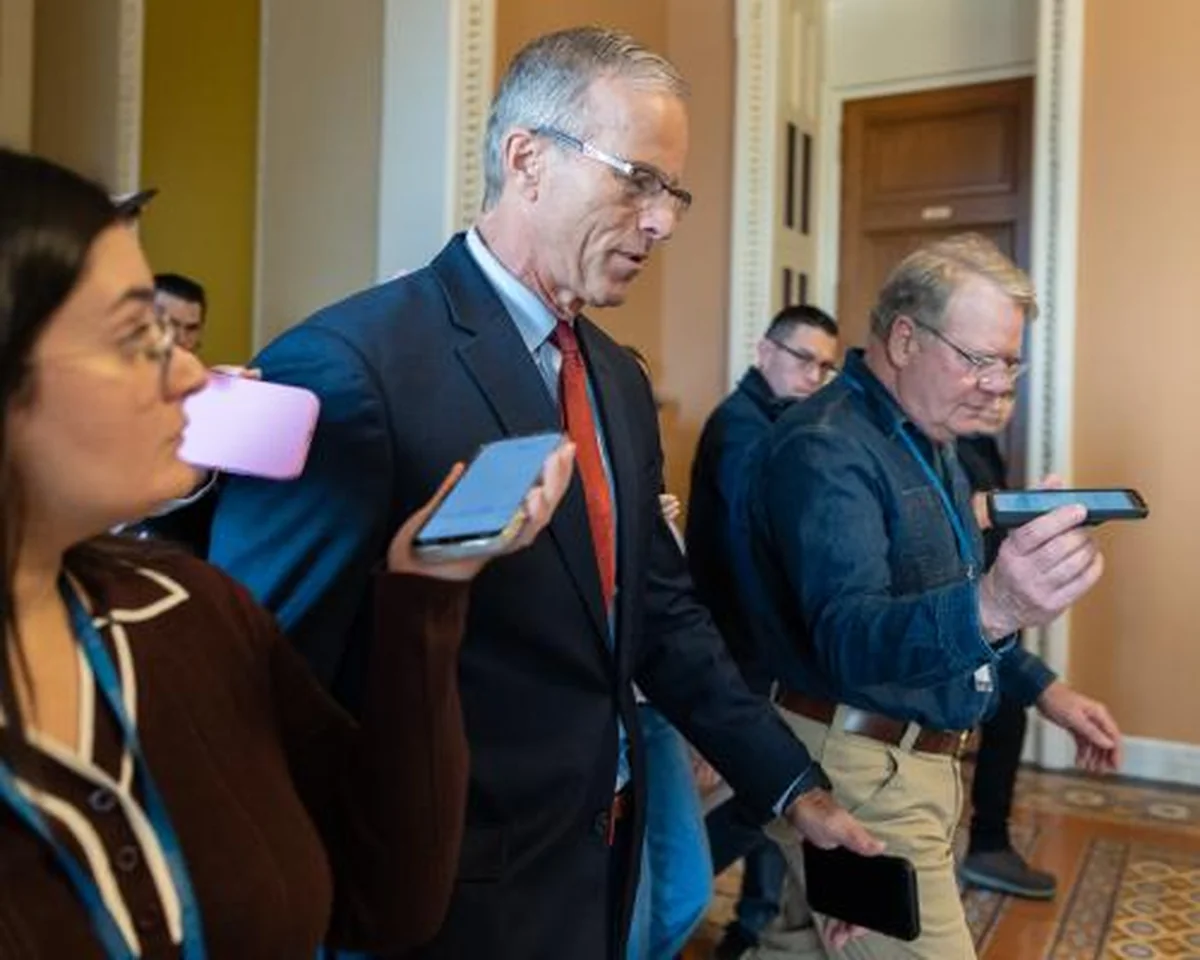
Senator John Thune, the Republican Senate majority leader, underscored the urgency of the situation following the vote. “After 40 long days, I’m hopeful we can bring this shutdown to the end,” Thune stated, reflecting the widespread desire for resolution. He emphasized the broad, bipartisan recognition of the crisis: “From the precarious situation we’re in with air travel to the fact that our staff have been working without pay for a full 40 days now, all of us, Republicans and Democrats who support this bill know that the time to act is now.”
### Key Provisions and Financial Impact
The proposed legislation is designed to authorize government funding through January 30, 2026, providing a significant period of fiscal stability. Crucially, it seeks to rectify the immediate personnel crisis by undoing the firings of federal workers that the White House authorized shortly after the shutdown commenced on October 1. Furthermore, the bill guarantees retroactive pay for all federal employees who were either furloughed or remained on duty without compensation during the shutdown, a measure intended to alleviate the severe financial strain many have endured. It also includes provisions to prevent any further layoffs through January and authorizes long-term spending for specific federal departments, aiming to restore operational normalcy.
### The Sticking Point: Healthcare Subsidies
Despite these significant concessions, the absence of an extension for tax credits supporting Affordable Care Act health plans remains a major point of contention. These credits, originally established under President Joe Biden’s administration, are set to expire at the close of the year, a development that would cause a sharp increase in premiums for millions of enrollees. Democrats have steadfastly maintained that they would not vote to reopen the government until Republicans agreed to reauthorize these vital subsidies. Republicans, however, have held firm in their refusal to include them in the current funding package.
In an effort to bridge this divide, Senator Thune has indicated to Democratic counterparts his willingness to hold a separate vote on continuing the healthcare subsidies once government funding has been successfully restored. This promise offers a glimmer of hope for Democrats, but the immediate legislative path remains fraught with uncertainty. The ultimate fate of the measure, particularly as it heads to a potentially hostile House, remains unclear, leaving a lingering question mark over the full resolution of this historic shutdown.
Source: The Guardian