Why Political Labels Miss the Mark on Mass Shooters
In the aftermath of tragic gun violence across the United States, a predictable pattern often emerges: the immediate and intense focus on a shooter’s political leanings. This rush to categorize perpetrators by their ideological alignment frequently overshadows a deeper, more nuanced understanding of the forces driving such horrific acts. While seemingly an attempt to make sense of senseless violence, experts contend that this narrow lens ultimately hinders efforts to combat the pervasive issue of gun violence.
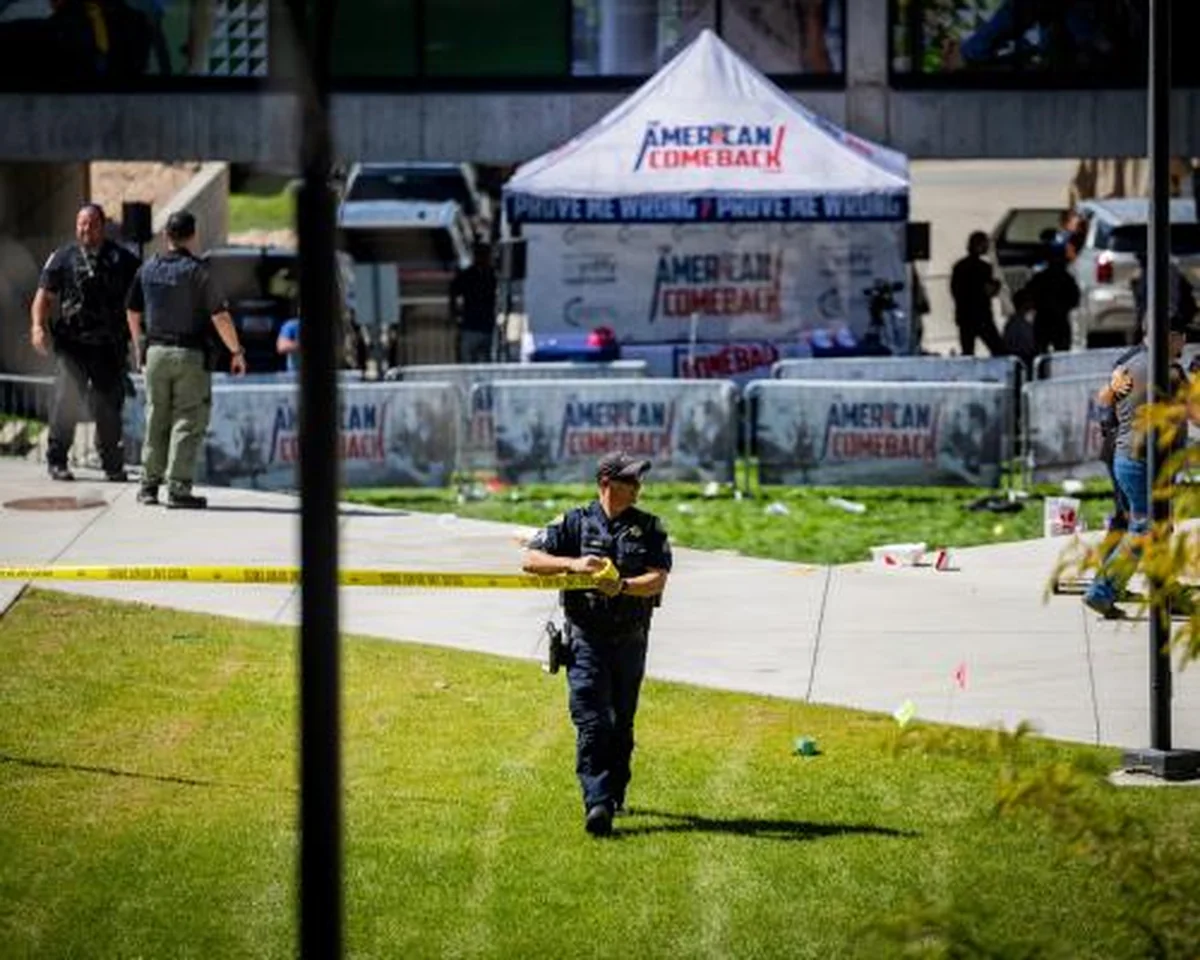
Recent high-profile incidents underscore this reactive tendency. Following a significant shooting event, Republican figures, including former President Donald Trump and Senator JD Vance, were quick to label a suspect as a “radical leftist,” even when comprehensive details about the individual’s background remained scarce. Similarly, after a young assailant opened fire at a Texas ICE facility last week, resulting in two fatalities and one injury, both law enforcement and media outlets swiftly investigated the attacker’s political affiliations. Days later, when a man launched an assault on a Mormon church, public attention quickly shifted to the pro-Donald Trump yard signs displayed at the suspect’s residence.
Beyond political affiliations, a shooter’s race and religious background also face intense scrutiny, particularly when the individual is not white or Christian. This immediate assignment of identity, however, can be misleading. Matthew Kriner, executive director of the Institute for Countering Digital Extremism, warns that “leaning so heavily on shooters’ political identity to understand mass violence fails to capture the evolving profile of people who decide to enact mass and targeted violence.”
The Evolving Profile of Perpetrators
The conventional wisdom of categorizing shooters as either Democrats or Republicans clashes with a growing body of academic research. This research indicates that many of the nation’s most prominent shootings in recent years have been perpetrated by individuals heavily influenced by online communities, where traditional partisan politics often hold little sway. These digital spaces can foster grievances and radicalization that transcend established political spectrums.
“When we try to distill them into a simple binary of politics, we’re missing the larger picture,” Kriner emphasizes. He argues that reducing complex motivations to a political label oversimplifies the problem. “These actors are not solely motivated by that, and it’s missing the grievance that’s driving this violence that is not ideological, partisan or political.”
Beyond Ideology: A Fixation on Violence
Kriner’s insights suggest that the true drivers of mass violence often lie beneath the surface of political rhetoric. The focus on political identity, while perhaps providing a quick, albeit superficial, explanation, distracts from the deeper psychological and social factors at play. The expert posits that the ideological stance of a shooter is frequently less relevant than a more fundamental issue.
“What we find, more often than not, is that the politics of a shooter are less relevant,” Kriner states. “It’s about the fixation on violence. Individuals can fixate on violence regardless of their racial or political or religious characteristics.” This profound observation suggests that the impulse to commit violence can manifest independently of an individual’s demographic or ideological profile.
To effectively address and prevent future tragedies, a shift in perspective is crucial. Moving beyond the immediate urge to label perpetrators by their political beliefs, and instead focusing on the underlying mechanisms of radicalization and the pervasive fixation on violence, could pave the way for more comprehensive and effective strategies to combat gun violence in the United States.
Source: The Guardian