Trump’s SNAP Standoff: ‘Poorest Used as Pawns’
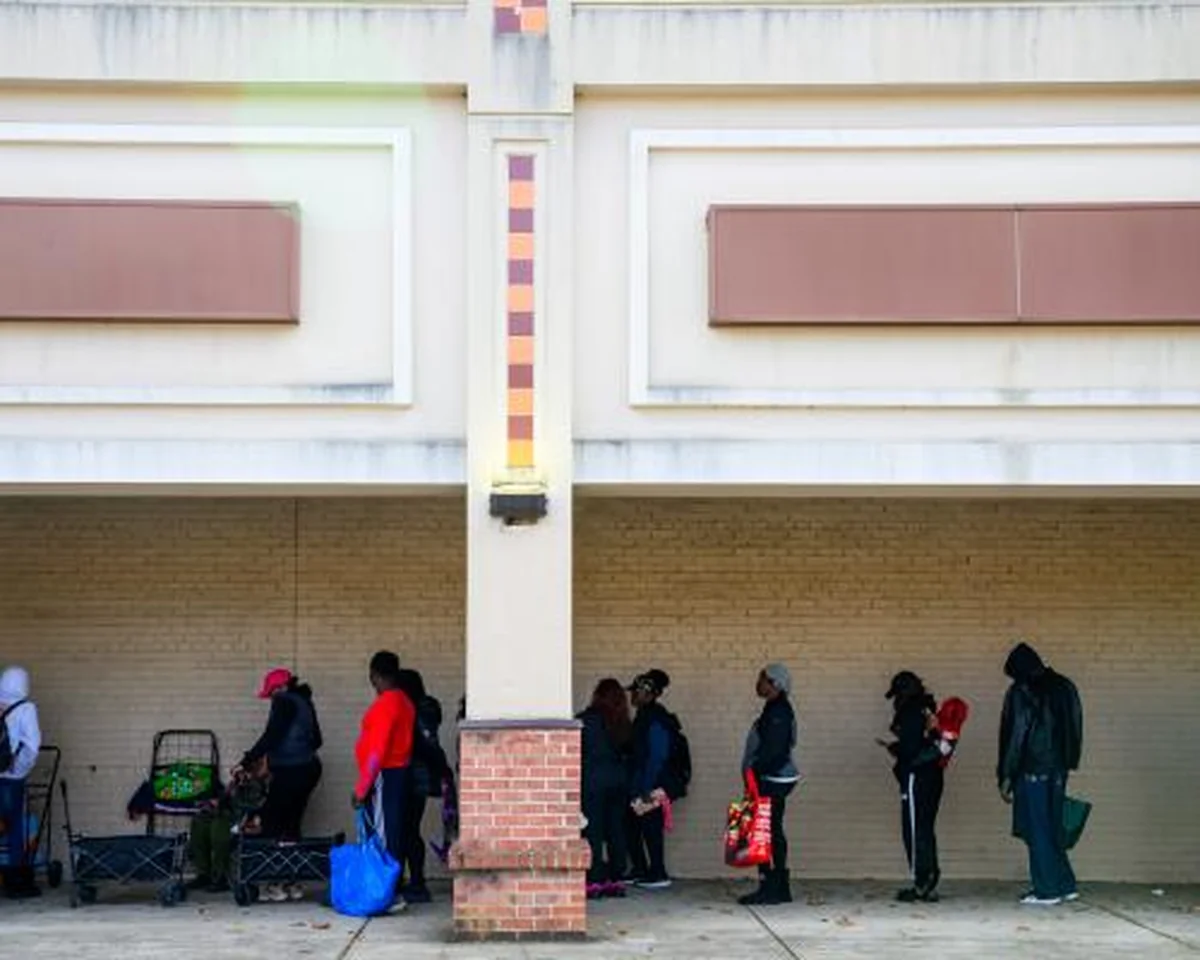
On a somber Monday morning, the first workday after federal food benefits abruptly ceased, government employee Stacy Smith arrived at her Providence, Rhode Island, office to a distressing sight. A lengthy queue of elderly and disabled individuals stretched outside her door, all desperately seeking answers. Many had attempted to purchase groceries, only to discover that their Supplemental Nutrition Assistance Program (SNAP) payments were no longer available.
The payments had been halted following a directive from the Trump administration, which declared it would not disburse benefits during the ongoing federal shutdown. This decision effectively crippled the nation’s largest anti-hunger initiative, impacting millions.
A Dire Scene in Providence
Smith, an eligibility technician for vital assistance programs including SNAP and president of American Federation of State, County and Municipal Employees (AFSCME) Local 2882, recounted a particularly heartbreaking exchange. “I had a client that came in and said they were afraid they were going to have to start eating cat food again, because without Snap benefits, that’s all they can afford, because they’re on a fixed income,” Smith revealed. “Those are the things that I leave my job, and I go home, and that’s what I’m thinking about.”
Her firsthand account underscores the profound human cost of the funding freeze. These are the daily realities faced by frontline workers assisting America’s most vulnerable.
Nationwide Repercussions
Nearly 42 million Americans depend on SNAP to put food on their tables. The suspension of these benefits marked an unprecedented moment in the program’s history. Across the country, workers who administer SNAP assistance voiced grave concerns about the devastating consequences for low-income families and individuals. Food banks, already stretched thin, reported significant surges in demand, struggling to cope with the sudden influx of newly food-insecure households.
The Legal Battle Unfolds
The initial blanket halt on SNAP funding, which officially lapsed on November 1st, quickly became a point of contention in the courts. Following two separate rulings that challenged its position, the Trump administration eventually agreed to provide only partial funding for the program.
However, the legal wrangling continued. On a recent Friday, the administration escalated the dispute by appealing to the Supreme Court. This appeal sought to overturn a lower court’s order that compelled the government to disburse full SNAP aid payments. In an emergency ruling, the Supreme Court temporarily granted the administration’s appeal, prolonging the uncertainty surrounding the critical assistance program.
Looming Uncertainty for Millions
As the Trump administration continues its legal fight against fully funding SNAP, the fear among low-income families remains palpable. With the holiday season rapidly approaching, the prospect of an extended period without adequate food assistance casts a long, dark shadow over millions of households already struggling to make ends meet. The ongoing battle over SNAP funding highlights a stark humanitarian crisis unfolding amidst political gridlock.
Source: The Guardian