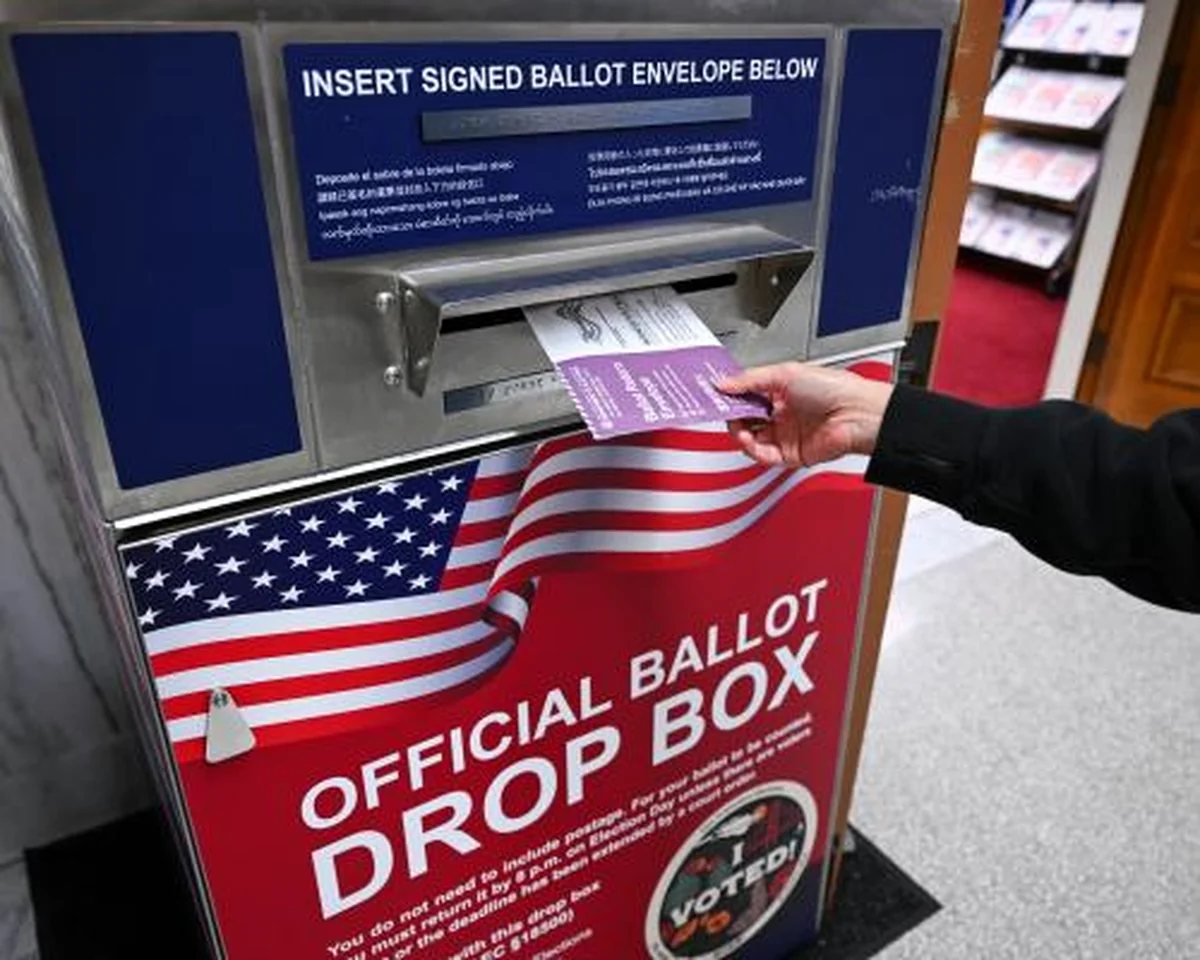
U.S. Supreme Court to Hear Late Mail Ballot Case
The U.S. Supreme Court declared on Monday its intent to review a pivotal legal dispute concerning whether individual states possess the authority to count mail-in ballots submitted before Election Day but received by election officials sometime afterward. This significant case, formally known as *Watson v Republican National Committee*, pits voter access against the strict interpretation of election timelines, potentially reshaping how millions of votes are processed nationwide.
High Court Takes Up Election Integrity vs. Voter Access
At the heart of the controversy is a Mississippi statute that permits mail ballots to be tallied if they arrive within five business days following the official election date, provided they bear a postmark from Election Day or earlier. Election administrators in Mississippi contend that, based on established legal precedent, a voter fulfills their duty by casting their ballot when it is postmarked. They argue that the subsequent journey of the ballot to an election office is purely an administrative matter, not a determinant of the vote’s validity.
In its petition urging the Supreme Court to take up the case, the state of Mississippi articulated its position clearly: “As a matter of plain meaning, an ‘election’ is the conclusive choice of an officer. Voters make that choice by casting – marking and submitting – their ballots by election day. The election has then occurred, even if election officials do not receive all ballots by that day.” This perspective emphasizes the voter’s timely action as the critical factor, rather than the logistical speed of the postal service.
Nationwide Implications for Voting Rules
The outcome of this case holds broad implications beyond Mississippi. According to data from the National Conference of State Legislatures, sixteen states, alongside Washington D.C., Guam, and Puerto Rico, currently maintain similar policies. These jurisdictions permit domestic mail-in ballots to be counted if they are postmarked by Election Day but arrive within a specified window thereafter. Such provisions are typically designed to safeguard voters from being disenfranchised due to postal delays, ensuring that diligent voters are not penalized by circumstances beyond their control.
The Legal Journey: From District to Appeals Court
The journey of this legal challenge through the federal court system has been complex. Initially, a federal judge in Mississippi affirmed the state’s law, validating its approach to post-Election Day ballot receipt. However, this decision was subsequently overturned by the U.S. Court of Appeals for the Fifth Circuit, recognized as one of the nation’s most conservative judicial bodies. The majority opinion from the Fifth Circuit asserted that federal law designates a singular day for federal elections, and allowing ballots to arrive after this date undermines that foundational principle.
The Fifth Circuit’s ruling, as highlighted in the Republican National Committee’s response to the Supreme Court appeal, drew a crucial distinction. It “distinguished between an individual ‘voter’s selection of a candidate’ and ‘the public’s election of the candidate.’” This differentiation suggests that while an individual may make their choice on time, the collective public election concludes on a specific day, and ballots received after that date might be seen as conflicting with the finality of the election process.
As the nation’s highest court prepares to deliberate, its decision in *Watson v Republican National Committee* will undoubtedly set a significant precedent for election administration, voter access, and the interpretation of federal election law across the United States, shaping the future of mail-in voting.
Source: The Guardian