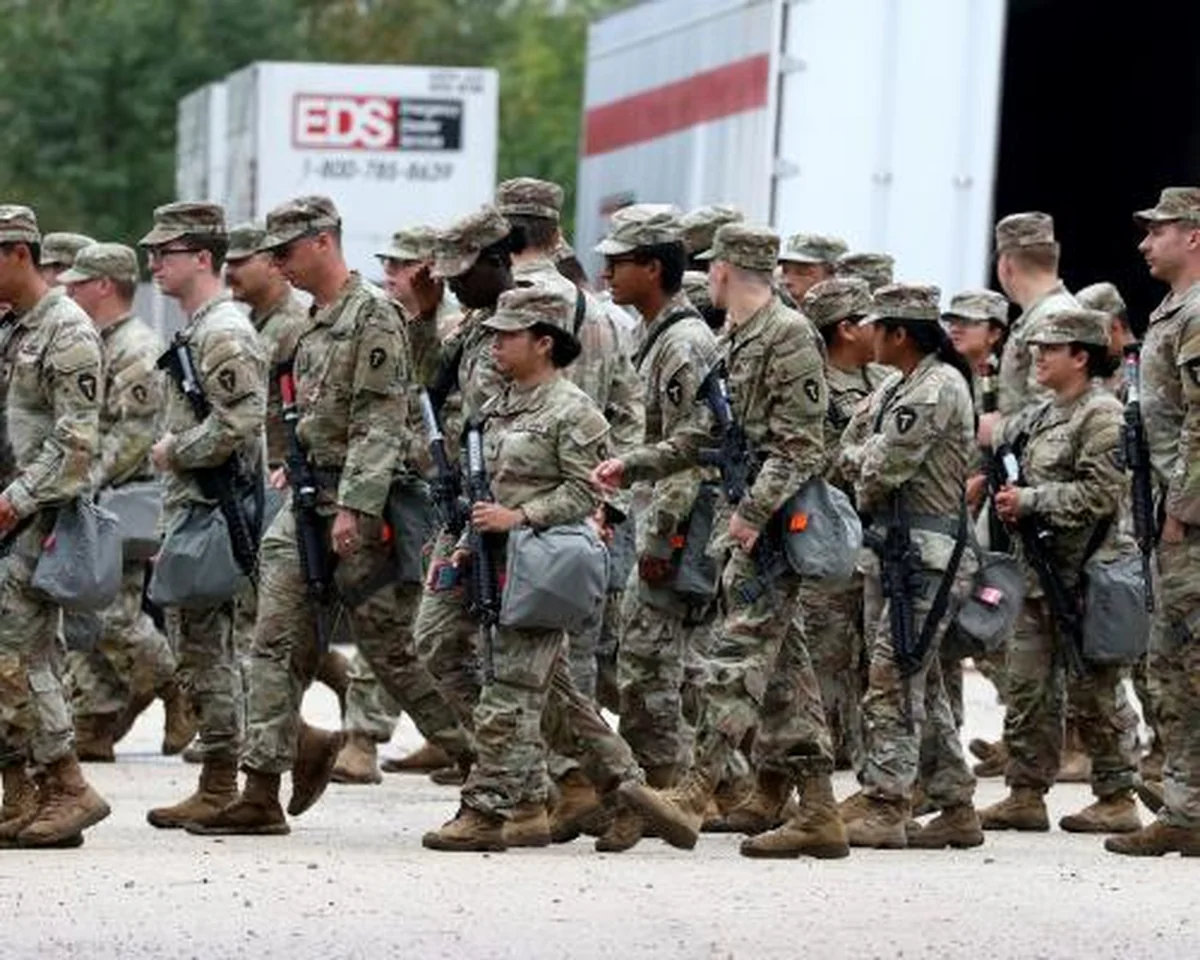
Trump’s Troop Pay Order Raises Legal, Precedent Fears
President Donald Trump’s directive to ensure U.S. military personnel continue to receive paychecks amidst a federal government shutdown has ignited a fierce debate among legal scholars and constitutional experts. While the move addresses the immediate financial concerns of a vital, politically revered demographic, critics warn it may be an illegal overreach that threatens Congress’s fundamental authority over government spending.
The current federal funding lapse, which began at the start of October, stems from an impasse between congressional Democrats and Republicans who failed to pass legislation extending appropriations beyond the end of September. This gridlock has led to the furlough of approximately 700,000 federal employees, with hundreds of thousands more continuing to work without immediate compensation. However, the military’s situation has been unilaterally carved out by the President’s order, prompting significant concern.
## Unprecedented Action and Constitutional Alarms
Experts, including those who spoke to The Guardian, contend that the President’s action to disburse funds to troops without explicit congressional authorization for the new fiscal year is highly questionable legally. If left unchallenged, this move could establish a perilous precedent, potentially allowing future presidents to bypass legislative approval for other contentious decisions, such as deploying military forces domestically.
Phil Wallach, a senior fellow at the American Enterprise Institute, a right-leaning think tank specializing in the separation of powers, expressed strong reservations. “I’m with the people who believe that there’s really no good legal justification for moving the money around in this way,” Wallach stated. He emphasized the absence of specific congressional authorization for troop payments in the current fiscal year, describing the action as “going pretty far out on a legal limb, and just sort of daring anybody to do anything about it. Because, of course, substantially, nobody thinks it’s very bad to pay the troops.”
## A Departure from Past Shutdowns
Historically, during previous government shutdowns, military personnel received their salaries through one of two mechanisms: either Congress had already approved the Department of Defense’s budget, or lawmakers had passed specific legislation to guarantee their pay. Bobby Kogan, a former official with the White House Office of Management and Budget now affiliated with the liberal Center for American Progress, highlighted this distinction.
“Troops were paid during previous government shutdowns because Congress had either approved defense department spending, or passed bills specifically to guarantee their salaries,” Kogan explained. In the current shutdown, neither of these legislative actions has occurred. Despite this, lawmakers have made unsuccessful attempts to pass broader legislation aimed at ensuring pay for all federal workers impacted by the funding lapse.
## Broader Implications for Governance
The President’s decision, while popular among the public for supporting service members, is seen by many as a direct challenge to the constitutional framework that vests spending power in the legislative branch. Should this action stand, it could fundamentally alter the balance of power, granting the executive branch greater autonomy in financial matters during periods of congressional disagreement. The long-term implications for democratic governance and the principle of checks and balances remain a significant point of concern for constitutional scholars across the political spectrum.
Source: The Guardian