Tech Leaders Influence Trump on San Francisco Troop Halt
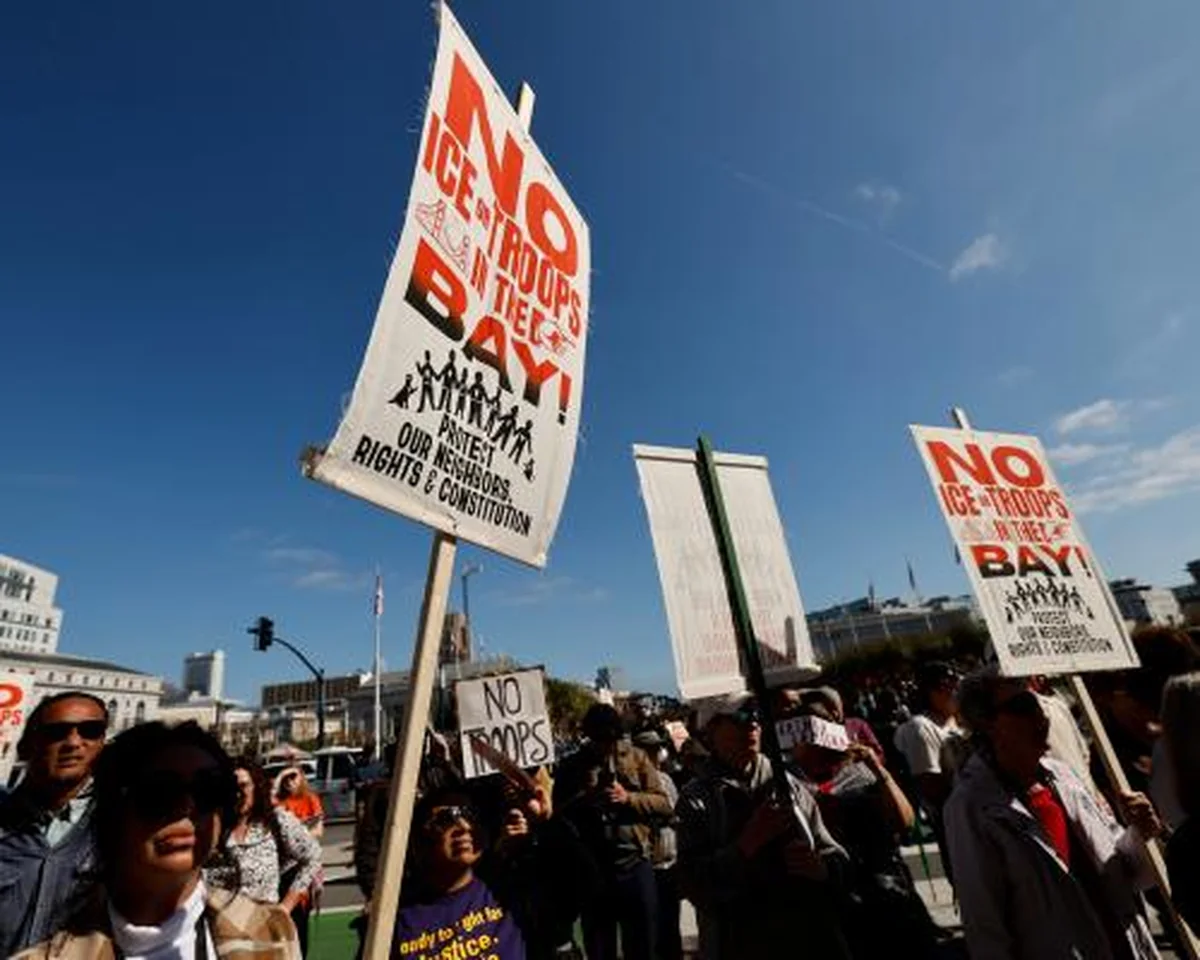
Leading figures from the technology sector reportedly persuaded former President Donald Trump to abandon plans for a federal troop deployment in San Francisco, a move the president revealed in a recent social media post. The decision underscores the expanding and unprecedented influence Silicon Valley executives now wield over high-level government policy decisions.
On Thursday, Trump disclosed that “friends of mine who live in the area called last night to ask me not to go forward with the surge.” He specifically identified Nvidia CEO Jensen Huang and Salesforce CEO Marc Benioff as key individuals in this intervention. The planned deployment, characterized by Trump as a “surge” of federal troops, was intended to address rising crime in the city.
Silicon Valley’s Direct Appeal to Trump
Writing on Truth Social, the social media platform he owns, Trump elaborated on his decision. “The people of San Francisco have come together on fighting Crime, especially since we began to take charge of that very nasty subject,” he posted. He continued, “Great people like Jensen Huang, Marc Benioff, and others have called saying that the future of San Francisco is great. They want to give it a ‘shot.’ Therefore, we will not surge San Francisco on Saturday.” This statement explicitly links the tech leaders’ advocacy to the reversal of the proposed military action.
The incident highlights a deepening relationship between the former president and prominent tech industry figures. Over recent years, these executives have increasingly cultivated close ties with Trump, frequently engaging in meetings at the White House. This alliance has not only involved policy discussions but has also seen tech giants contribute significant financial resources, including millions of dollars to settle lawsuits and secure lucrative government contracts.
Unprecedented Influence Beyond Tech
The symbiotic relationship extends to direct financial support for Trump’s personal projects. Companies like Apple, Amazon, Meta, Microsoft, Google, and Palantir collectively contributed millions toward the construction of Trump’s $300 million ballroom at the White House. This level of engagement and financial backing has granted tech leaders an unparalleled degree of sway over government policy, surpassing that observed in any prior administration, including Trump’s first term in office.
What makes this latest intervention particularly notable is that Trump appears to be heeding their counsel on matters entirely outside the traditional purview of technology. Deploying federal forces to American cities is a significant national security and domestic policy decision, far removed from tech regulation or innovation. This demonstrates a broadening scope of influence for these unelected corporate leaders.
Alix Fraser, the vice-president of advocacy at Issue One, a nonprofit dedicated to reducing the impact of money in politics, commented on the situation. “President Trump’s back-and-forth over sending troops to San Francisco shows just how much power a handful of tech executives have to influence decisions that affect millions of Americans,” Fraser stated. “No one elected these CEOs, but their money and access have given them an outsized voice in Washington – and everyday people are left out of the conversation.”
This episode in San Francisco serves as a potent illustration of how the corridors of power in Washington are increasingly open to the direct appeals of Silicon Valley’s elite, potentially reshaping the landscape of political decision-making in the United States.
Source: The Guardian