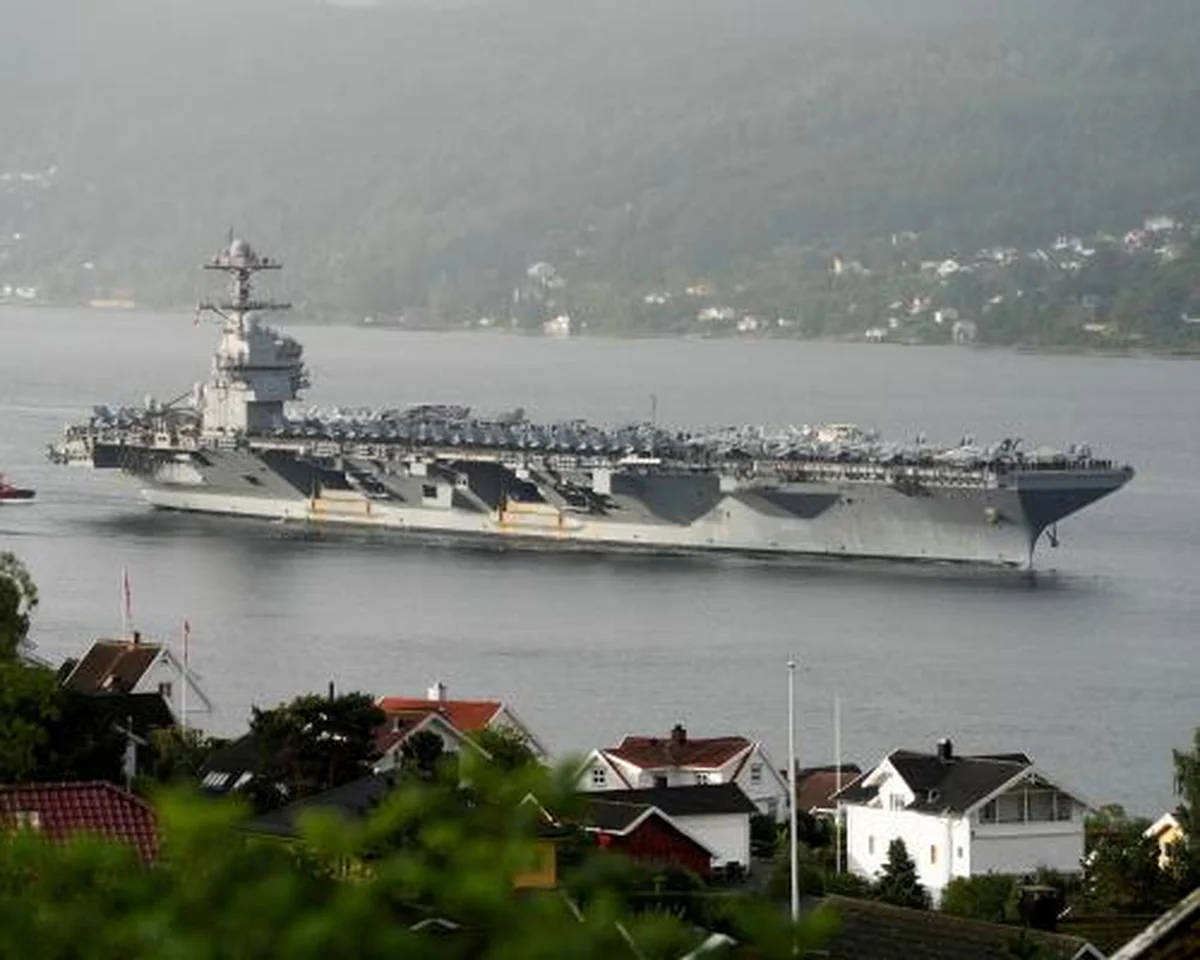
US Supercarrier Enters Region Amid Venezuela Tensions
The U.S. Navy’s most advanced and largest aircraft carrier, the USS Gerald R. Ford, has officially commenced operations within the U.S. Southern Command’s area of responsibility, a vast region encompassing Latin America and the Caribbean. This high-profile deployment, announced nearly three weeks prior, signals a significant escalation in the ongoing military buildup between the United States and Venezuela.
The arrival of the nuclear-powered supercarrier and its accompanying strike group, which includes numerous aircraft and destroyer ships, marks a substantial increase in American military might near the Venezuelan coast. In response, the administration of Venezuelan President Nicolás Maduro declared a “massive deployment” of its own forces, encompassing land, sea, air, riverine, and missile capabilities, alongside civilian militia elements, to counter the perceived U.S. naval threat.
A Growing Regional Presence
The USS Gerald R. Ford joins an already robust U.S. military presence in the region, which includes other warships, a nuclear-powered submarine, and aircraft stationed in Puerto Rico. This combined force represents the largest concentration of U.S. military assets in the area in decades, drawing comparisons to the scale of operations seen during the 1989 invasion of Panama.
The heightened military activity comes amid a period of strained relations between Washington and Caracas. While the U.S. has officially framed the deployment within the context of a broader anti-narcotics campaign, many observers interpret it as a strategic move to exert pressure on the Maduro government.
The “War on Drugs” Rationale
Former President Donald Trump initially justified the substantial military buildup as an integral part of his administration’s “war on drugs.” This initiative specifically targets traffickers allegedly involved in smuggling narcotics through the vital Caribbean and Pacific waterways. The campaign has included direct action, with airstrikes on vessels reportedly leading to the deaths of at least 76 individuals in South American waters since September.
Sean Parnell, the chief spokesperson for the Pentagon, elaborated on the mission in a statement released by the U.S. Navy. He affirmed that the USS Gerald R. Ford, carrying “more than 4,000 sailors and dozens of tactical aircraft aboard,” is poised to “bolster U.S. capacity to detect, monitor, and disrupt illicit actors and activities” across the region. Parnell further emphasized that these forces would “enhance and augment existing capabilities to disrupt narcotics trafficking and degrade and dismantle transnational criminal organisations.”
Underlying Geopolitical Tensions
Despite the official anti-drug trafficking narrative, numerous political analysts view the increased military presence and the aggressive interdiction tactics as a direct strategy to pressure President Maduro into relinquishing power. This perspective stems from allegations that Maduro “stole last year’s election,” leading to widespread international condemnation and a protracted political crisis in Venezuela.
For his part, President Maduro has vehemently accused the United States of “fabricating a new war” and has characterized the naval deployment as “the greatest threat to our sovereignty and stability.” The complex interplay of anti-narcotics operations, geopolitical maneuvering, and internal Venezuelan political dynamics continues to define a tense and volatile situation in the Caribbean basin.
Source: The Guardian