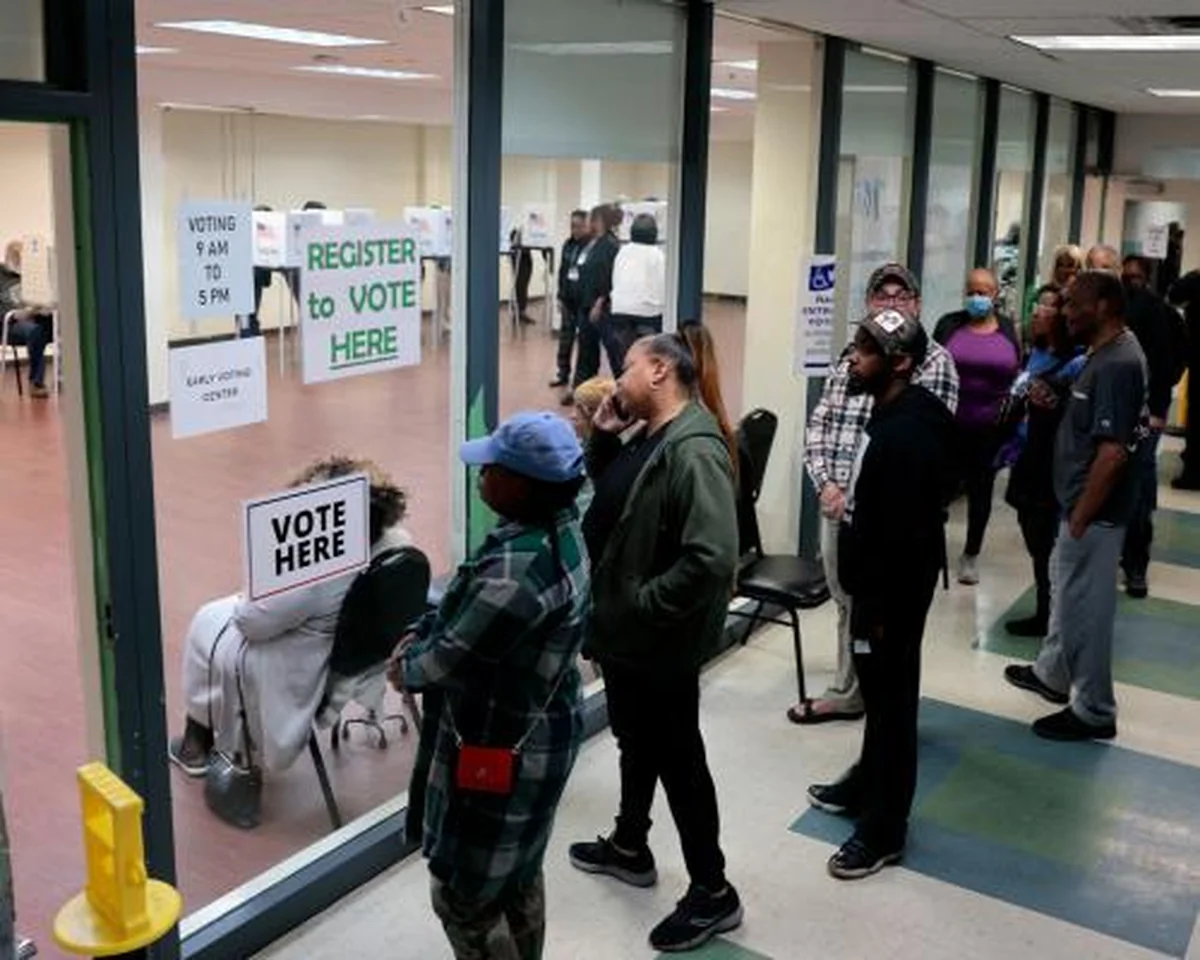
Supreme Court Case Puts Voting Rights Act’s Core at Risk
The U.S. Supreme Court stands on the precipice of a decision that could fundamentally reshape the landscape of American democracy, potentially dismantling the cornerstone of the nation’s most potent defense against voting discrimination. In the upcoming ruling for *Louisiana v Callais*, the high court is poised to address the constitutionality of Section Two of the Voting Rights Act (VRA), a provision widely regarded as a jewel of the civil rights movement and the most powerful statute designed to prevent electoral bias.
A potential adverse outcome from the Court’s deliberations in *Louisiana v Callais* could represent one of the most consequential rulings concerning the Voting Rights Act since its enactment in 1965. It is almost certainly the most significant challenge to the law since the Court’s 2013 decision in *Shelby County v Holder*, where justices significantly curtailed Section Five, a provision that mandated certain jurisdictions obtain federal approval for voting changes before implementation.
## A Pillar of Civil Rights Under Scrutiny
Enacted in 1965, the Voting Rights Act was a monumental legislative achievement, designed to overcome legal barriers at state and local levels that historically prevented African Americans and other minority groups from exercising their fundamental right to vote. While parts of the VRA have faced challenges over the decades, Section Two has remained the primary bulwark against practices that dilute minority voting power.
### The Legacy of Section Two
Section Two specifically outlaws electoral practices that result in racial discrimination, even if not intentionally designed to do so. This vital measure has been the go-to legal instrument for minority voters and advocacy groups to contest gerrymandered redistricting plans. From congressional districts to local county commissions and school boards, Section Two has been critical in challenging maps that strategically group voters to diminish the political influence of minority communities.
The elimination of Section Two, or a severe limitation on how it can be applied, would effectively cripple the Voting Rights Act. It would strip away the most powerful legal avenue voters possess to challenge racially discriminatory electoral maps and practices.
### A Precedent from Shelby County
This pending decision marks arguably the most significant test for the Voting Rights Act since the Court’s 2013 ruling in *Shelby County v Holder*. In that landmark case, justices effectively invalidated Section Five, a key provision requiring certain jurisdictions with histories of discrimination to obtain federal approval for any changes to their voting procedures. Striking down or severely limiting Section Two now would leave the VRA largely toothless, removing the primary legal recourse for voters to challenge racially discriminatory electoral maps.
## The Core of the Louisiana Dispute
The specific controversy before the Supreme Court in *Louisiana v Callais* centers on a challenge initiated by white voters against a majority-Black congressional district in Louisiana, which spans geographically from Shreveport to Baton Rouge. The justices heard oral arguments in this contentious case back in March, which delved into complex questions surrounding the state’s congressional map and the application of Section Two.
### Nationwide Implications
The potential ramifications extend far beyond Louisiana’s borders. Sophia Lin Lakin, director of the voting rights project at the American Civil Liberties Union (ACLU), underscored the profound stakes involved. “The stakes are potentially quite large,” Lakin stated. “The outcome of the case will not only determine the next steps for Louisiana’s congressional map, but may also shape the future of redistricting cases nationwide.”
As the nation awaits the Supreme Court’s verdict, the future of voting rights hangs in the balance. A decision that weakens Section Two could usher in an era where minority voters face significantly higher hurdles in ensuring fair representation, fundamentally altering the democratic landscape for generations to come. The integrity of the ballot box, and indeed the very promise of equal participation, rests heavily on this pivotal ruling.
Source: The Guardian